

Módulos & Calculadoras[01]
Calculadora de IMC
Calculadora de TMB & GET
Calculadora de Macronutrientes
Calculadora de Hidratação
Discover what clinical trials prove about this Andean root for libido, vitality, and menopause, the key differences between colors, and why preparation matters.
Editor e Criador do Metaboliza
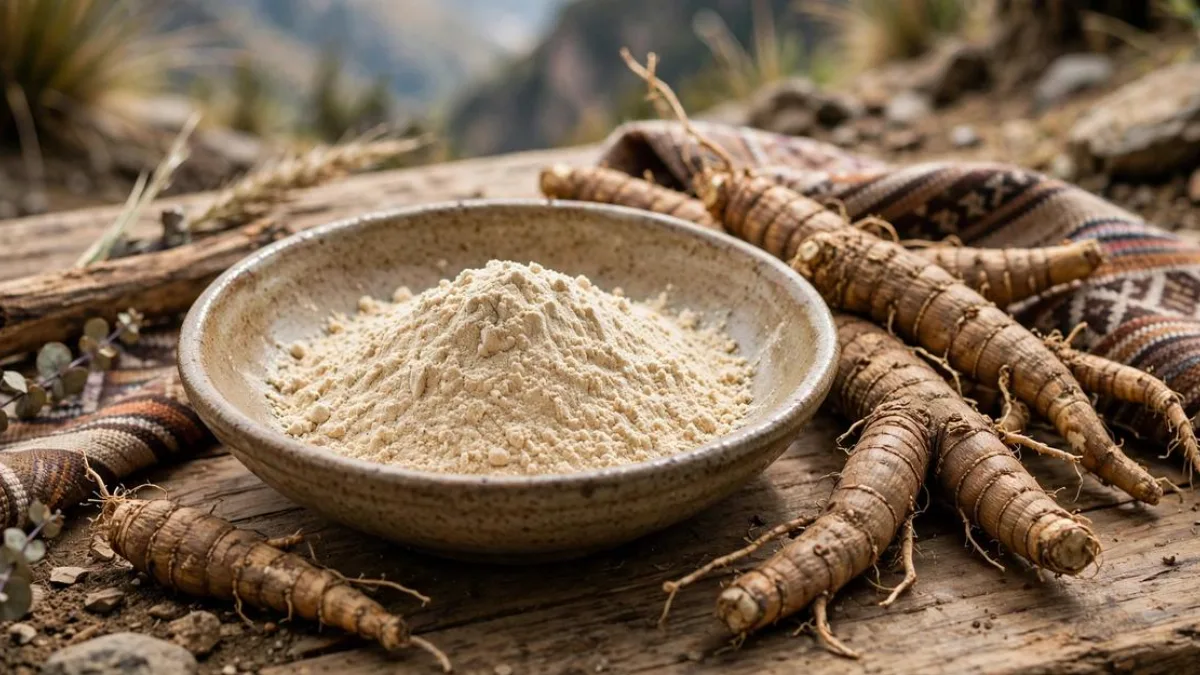
Finely ground organic Peruvian maca root powder in a rustic ceramic bowl alongside dried Andean roots
Peruvian Maca (Lepidium meyenii) is an ancient, hardy biennial root belonging to the cruciferous plant family — the same botanical group that includes broccoli, cabbage, and radishes. For over 2,000 years, it has been cultivated exclusively across the harsh, windswept high plateaus of the central Peruvian Andes at elevations exceeding 13,000 feet (4,000 meters).
To thrive under extreme environmental stressors including sub-zero temperatures, intense ultraviolet radiation, and rocky soil, the plant developed a specialized secondary metabolic defense system. It synthesizes exclusive bioactive lipids known as macamides and macaenes, alongside glucosinolates, phytosterols, and unique polyphenols.
In modern phytomedicine, maca is categorized as an authentic adaptogen. Unlike high-dose caffeine, which stimulates the central nervous system through adrenal exhaustion, adaptogens support homeostasis by modulating the hypothalamic-pituitary-adrenal (HPA) axis, helping the human body adapt smoothly to physical, emotional, and environmental stress.
Maca's worldwide popularity is closely tied to claims regarding reproductive vitality. However, modern endocrinology has clarified its exact biological mechanism:
• The testosterone misconception: many fitness consumers purchase maca believing it acts as a prohormone or anabolic booster. A landmark double-blind randomized clinical trial led by Dr. Gustavo Gonzales revealed that while daily maca consumption dramatically increased subjective sexual desire after eight weeks, circulating serum testosterone and estradiol levels remained completely unchanged.
• How does it actually work? Pharmacological research reveals that macamides act upstream within the central nervous system and the endocannabinoid network. By gently inhibiting the fatty acid amide hydrolase (FAAH) enzyme and modulating dopamine receptor signaling, maca enhances neurochemical receptivity to arousal and promotes subjective mental stamina.
• Male reproductive parameters: clinical trials demonstrate that regular consumption improves seminal volume, total sperm count, and forward sperm motility in healthy adult men.
• Relief from menopausal symptoms: a pivotal clinical study published in Menopause established that maca significantly decreases troublesome climacteric complaints, including hot flashes, night sweats, and depressive mood swings in postmenopausal women, without exerting direct estrogenic effects on tissue.
While originating from the identical botanical species, maca phenotypes express distinct root coat colors containing unique phytochemical ratios:
• Yellow Maca (Golden): constitutes roughly 60% of the annual Andean harvest. It represents the time-tested, foundational variety favored for daily vitality, mental focus, sustained physical stamina, and generalized stress resilience for both sexes.
• Red Maca: features the highest total polyphenol and antioxidant density. Peer-reviewed investigations highlight its therapeutic utility for female reproductive wellness (menopausal symptom management and bone mineral density support) as well as preclinical protective effects against benign prostatic hyperplasia (BPH) in men.
• Black Maca: the rarest harvest phenotype (approximately 15%). Published clinical data singles out black maca for its targeted support of spermatogenesis (sperm concentration and motility), enhanced muscular work capacity, and cognitive neuroprotection.
Selecting the correct commercial formulation is critical for maximizing bioactivity and safeguarding digestive comfort. Historically, indigenous Andean cultures never consumed raw maca:
• The drawback of Raw Maca powder: unheated maca root contains dense, complex raw starches and enzyme inhibitors that are notoriously difficult for human digestive enzymes to hydrolyze. Consuming raw maca powder frequently causes severe abdominal bloating, stomach cramps, and gastrointestinal distress.
• The superiority of Gelatinized Maca: despite its name, gelatinization involves zero animal gelatin. It is an advanced thermodynamic milling process where sun-dried roots are gently flash-heated under pressure to disassemble raw starch polymers. This process strips away indigestible matter, preserves fragile macamides, and yields a highly bioavailable powder that is exceptionally gentle on the stomach.
• Evidence-based daily dosage: the clinically validated dosage in human trials ranges from 1.5g to 3g per day (approximately one level teaspoon of powder or standardized capsules).
• Timing recommendation: consume your daily serving during breakfast or lunch alongside food. Due to its energizing effect, avoid evening consumption to prevent interference with natural sleep cycles.
Having served as a staple whole food for indigenous mountain populations for millennia, high-quality gelatinized maca demonstrates an outstanding safety and tolerability record:
• Myth: 'Does maca cause body fat gain?': no. A therapeutic daily serving of 3 grams provides a negligible 10 to 12 calories, making any direct contribution to body fat accumulation biologically impossible.
• Who should exercise clinical caution? Because maca is a cruciferous plant containing glucosinolates, individuals with untreated thyroid disorders (such as unmanaged hypothyroidism) should exclusively use gelatinized products and consult their endocrinologist. Additionally, pregnant and nursing mothers should refrain from supplementation due to an absence of dedicated safety trials in these specific groups.
When incorporated consistently at appropriate dosages, gelatinized Peruvian maca serves as a dependable, evidence-backed adaptogen to support vitality, reproductive wellness, and emotional equilibrium.
Aviso de Saúde
O conteúdo deste artigo é puramente informativo e educacional, baseado em pesquisas publicadas. Ele não substitui o aconselhamento, diagnóstico ou tratamento médico profissional. Consulte sempre um médico ou nutricionista antes de realizar mudanças na sua dieta, treino ou suplementação.
Criador do Metaboliza, focado em simplificar a ciência da nutrição, metabolismo e biohacking para uma vida de alta performance.
Participe da discussão com a comunidade do Metaboliza