

Módulos & Calculadoras[01]
Calculadora de IMC
Calculadora de TMB & GET
Calculadora de Macronutrientes
Calculadora de Hidratação
Understand the science behind this grain protein, the differences between celiac disease and sensitivity, and why eliminating gluten is not always the best fat loss strategy.
Editor e Criador do Metaboliza
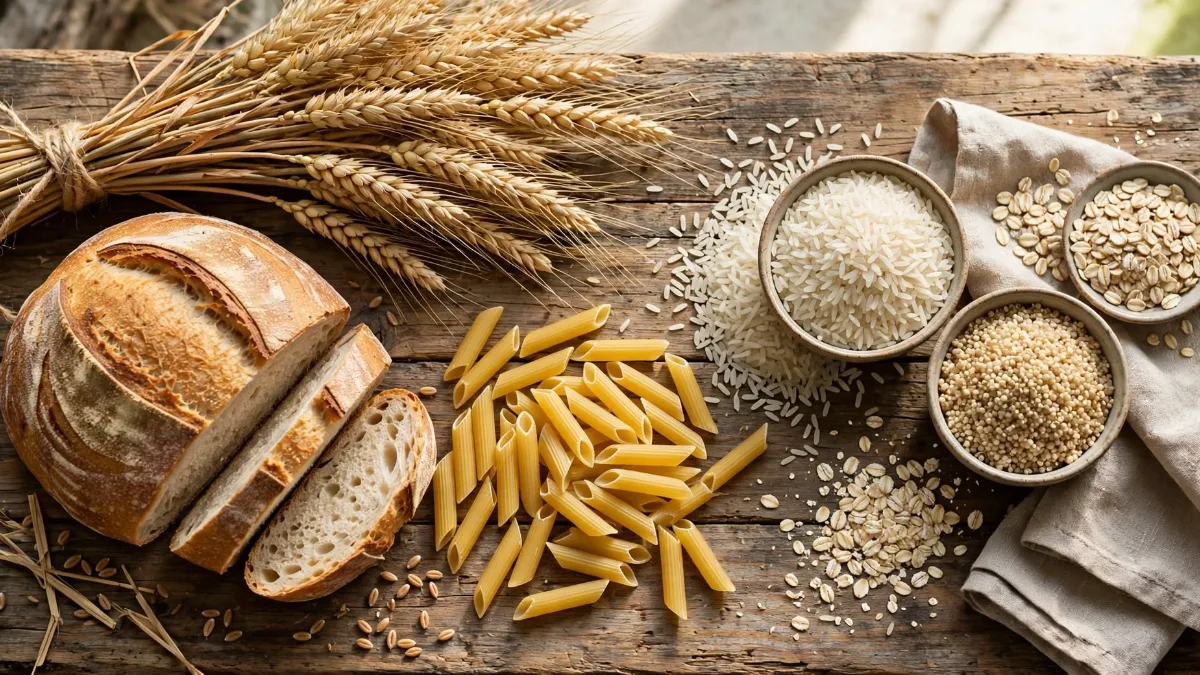
Golden wheat ears arranged alongside whole grains and naturally gluten-free flours
In recent years, gluten has become one of the most widely discussed and misunderstood nutritional topics. While popular health culture frequently demonizes it as an intrinsic driver of digestive disease and unwanted weight gain, millions of healthy individuals consume it daily without any adverse effects. To make informed decisions, it is essential to first understand the biology of what gluten actually is.
Gluten is neither a carbohydrate nor a fat: it is a complex family of plant storage proteins found naturally in the seeds of specific cereal grains, primarily wheat, barley, and rye. This protein complex is formed by two primary peptide fractions known as gliadin and glutenin. In culinary preparation, when wheat flour is hydrated and kneaded, these two proteins cross-link to form an elastic, viscous network. This three-dimensional web traps carbon dioxide gas bubbles released by yeast, allowing breads and doughs to rise, retain moisture, and achieve their characteristic chewiness.
Common foods containing gluten include conventional sandwich breads, pasta, pastries, cookies, pizza dough, standard beers (brewed with malted barley), and traditional soy sauce, which utilizes wheat during fermentation. In contrast, pure oats are botanically gluten-free; however, in conventional agriculture, oats are widely harvested, milled, and transported using the same equipment as wheat, resulting in pervasive cross-contamination. Consequently, only oats certified with a designated 'Gluten-Free' seal are clinically safe for individuals with celiac disease.
For the vast majority of the general population, gluten proteins are digested and passed through the intestinal lumen without triggering inflammatory cascades. However, evidence-based medicine identifies three distinct clinical conditions where consuming wheat and related grains requires clinical intervention:
• Celiac Disease: A serious, genetically driven autoimmune disorder affecting roughly 1% of the global population. When a person with celiac disease ingests even minute traces of gluten, their immune system triggers an autoimmune attack against the mucosal lining of the small intestine. This results in progressive flattening and blunting of the intestinal villi (enteropathy), severely compromising the surface area required to absorb iron, calcium, folate, and fat-soluble vitamins. Management demands lifelong, 100% strict adherence to a gluten-free diet without exception.
• Non-Celiac Gluten Sensitivity (NCGS): Individuals with NCGS experience tangible gastrointestinal symptoms (such as bloating, abdominal pain, and bowel irregularity) and extra-intestinal manifestations (such as chronic fatigue, brain fog, and headaches) following wheat consumption. Crucially, their medical evaluations demonstrate neither celiac autoantibodies nor villous atrophy, and they test negative for IgE wheat allergies. Contemporary research indicates that other wheat components — such as fermentable short-chain carbohydrates (fructans, belonging to the FODMAP family) and amylase-trypsin inhibitors (ATIs) — may be the primary triggers of this visceral discomfort.
• Wheat Allergy: A classical IgE-mediated food allergy to proteins present across the wheat grain (not solely limited to gluten). Most commonly diagnosed in early childhood, it can cause rapid systemic allergic reactions including hives, facial swelling, asthma, digestive spasms, and potentially life-threatening anaphylaxis.
One of the most persistent fitness myths is that going gluten-free is a magic bullet for rapid fat loss. Many people eliminate wheat from their routine and observe early reductions in scale weight alongside flatter stomachs. However, the physiological driver behind this change has nothing to do with eliminating gluten proteins themselves.
When individuals eliminate gluten from their everyday habits, they simultaneously cut out calorie-dense refined items: bakery pastries, commercial sandwich bread, deep-dish pizzas, battered fried foods, and evening beers. These foods are packed with refined carbohydrates, industrial vegetable oils, and elevated calories. Therefore, weight loss is the direct mathematical result of an overall caloric deficit, not an inherent metabolic benefit of gluten removal.
Furthermore, navigating the grocery store reveals the 'Gluten-Free' processed food trap. To recreate the textural elasticity and moisture typically provided by wheat gluten, commercial food manufacturers often pack gluten-free specialty breads, crackers, and snacks with refined starch blends (tapioca starch, corn starch, potato starch), extra refined cane sugars, and solid vegetable fats. Consequently, many packaged gluten-free alternatives contain substantially less dietary fiber, fewer essential micronutrients, and more calories per serving than their original whole-wheat counterparts.
Large prospective cohort studies, including long-term clinical data published in the British Medical Journal (BMJ), confirmed that healthy adults who unnecessarily avoid gluten frequently curtail their consumption of cardio-protective whole grains, which may inadvertently deprive them of essential fiber and dietary polyphenols.
If you suspect that wheat consumption is creating genuine health complications in your daily life, it is vital to recognize clinical warning signs that warrant comprehensive gastroenterological evaluation:
• Persistent gastrointestinal distress: severe and uncomfortable abdominal bloating that progressively worsens over the day, chronic watery or greasy diarrhea, alternating constipation, and painful gut spasms.
• Systemic and nutritional red flags: unexplained iron-deficiency anemia that fails to resolve with standard oral iron supplementation, unintended weight loss, chronic and debilitating fatigue, recurrent aphthous mouth ulcers, joint pain, and early reductions in bone mineral density.
A critical clinical warning: never eliminate gluten from your diet prior to undergoing clinical diagnostic testing. Standard diagnostic protocols rely on measuring elevated blood serum IgA tissue transglutaminase antibodies (tTG-IgA) and performing duodenal endoscopic biopsies. These clinical markers depend on an active dietary challenge with gluten. If you withdraw gluten weeks prior to testing, circulating antibody titers rapidly drop and intestinal villi begin mucosal healing, generating false-negative test results and delaying an accurate diagnosis for years.
Whether following medical instructions for a diagnosed condition or personal digestive exploration, maintaining a low-gluten or strictly gluten-free lifestyle can be exceptionally healthy — provided it is centered around nutrient-dense whole foods rather than ultra-processed packaged substitutes.
Focus your daily meals on these naturally gluten-free, unrefined carbohydrate sources:
• Nutrient-rich roots and tubers: sweet potatoes, purple potatoes, cassava, yams, and parsnips supply clean, sustained energy, abundant minerals, and prebiotic dietary fibers.
• Ancestral whole grains and pseudo-grains: brown rice, wild rice, quinoa, non-GMO corn, amaranth, and chia seeds offer rich complete proteins and micronutrients with zero intrinsic gluten content.
• Certified Gluten-Free oats: a tremendous source of beta-glucan (a scientifically validated soluble fiber known to lower LDL cholesterol and support heart health), provided they carry verified non-contamination guarantees.
• Nutritious whole-food flours: almond flour, coconut flour, chickpea flour, and cassava flour allow for wholesome home cooking with superior satiety and balanced glycemic index.
Balance and perspective are key: if you do not suffer from celiac disease or confirmed sensitivity, there is no scientific reason to fear artisanal sourdough or whole-grain breads. If you have an active medical condition, eliminate gluten with confidence while nourishing your body with authentic whole foods, lean proteins, vegetables, and healthy fats.
Aviso de Saúde
O conteúdo deste artigo é puramente informativo e educacional, baseado em pesquisas publicadas. Ele não substitui o aconselhamento, diagnóstico ou tratamento médico profissional. Consulte sempre um médico ou nutricionista antes de realizar mudanças na sua dieta, treino ou suplementação.
Criador do Metaboliza, focado em simplificar a ciência da nutrição, metabolismo e biohacking para uma vida de alta performance.
Participe da discussão com a comunidade do Metaboliza