

Módulos & Calculadoras[01]
Calculadora de IMC
Calculadora de TMB & GET
Calculadora de Macronutrientes
Calculadora de Hidratação
Discover how to identify warning signs in your body, the vital difference between intolerance and milk allergy, what dairy you can still enjoy, and practical daily strategies.
Editor e Criador do Metaboliza
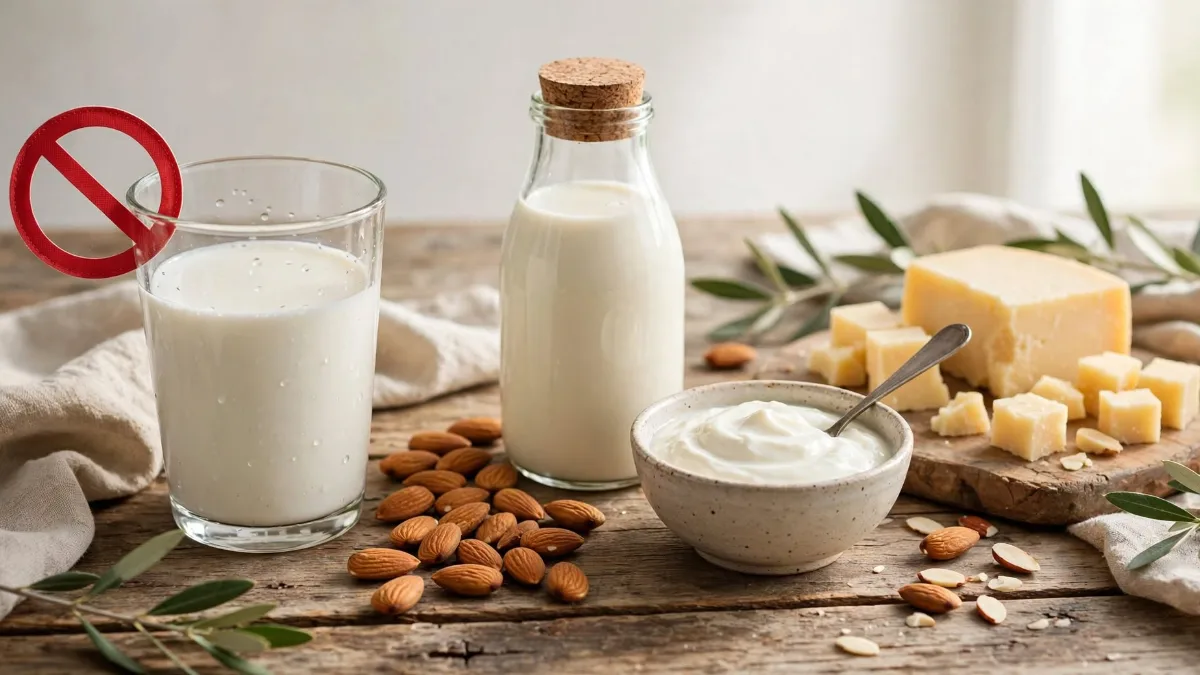
Glass of plant-based milk alongside fermented dairy products on a rustic wooden table
If you regularly experience stomach bloating, cramping, or sudden digestive distress shortly after drinking milk, having ice cream, or eating cheese pizza, chances are you have suspected lactose intolerance. This condition is extraordinarily common across the globe, affecting a major percentage of the adult human population.
To understand the mechanism simply, consider lactose as a dual-sugar molecule made of two simple sugars bound together: glucose and galactose. The human intestinal wall cannot absorb this complex sugar as a single unit; it must be split apart. To perform this precise split, our small intestine secretes a specialized digestive enzyme called lactase, acting like biological scissors.
During infancy, humans produce copious quantities of lactase to digest mother's breast milk. However, in most adult populations, our genetic programming gradually downregulates lactase production after weaning (a biological reality known as lactase non-persistence). When someone consumes more dairy sugar than their remaining enzymes can handle, the undigested lactose travels untouched into the large intestine, where resident colon bacteria ferment it vigorously.
A common and potentially dangerous misunderstanding is confusing lactose intolerance with a true cow's milk protein allergy (CMPA). While both conditions involve dairy products, their physiological origins and health risks are completely distinct.
Lactose intolerance is strictly a mechanical and digestive issue. The body simply lacks sufficient lactase enzymes to split milk sugar. While it causes pronounced abdominal discomfort, it is never life-threatening and does not engage the body's immune defenses. Furthermore, intolerance is strictly dose-dependent: a splash of cream in coffee might cause zero issues, whereas two large glasses of whole milk could trigger urgent cramps.
Conversely, milk protein allergy is an immune-mediated response against dairy proteins such as casein and whey. Predominantly diagnosed in infants and young children, true allergies can trigger dangerous reactions from even microscopic traces of milk, including hives, swelling of the lips and throat, vomiting, wheezing, and potentially fatal anaphylactic shock. People with milk protein allergies must never consume 'lactose-free' dairy, because the allergenic milk proteins remain fully intact.
Lactose intolerance symptoms typically manifest between 30 minutes and 2 hours following dairy ingestion. The intensity of symptoms depends on the quantity of lactose consumed, gastric emptying speed, and each person's baseline lactase enzyme levels.
When unabsorbed lactose enters the colon, two physiological events occur simultaneously: it exerts an osmotic draw that pulls extra water into the bowel lumen, and colon bacteria begin rapid fermentation. This triggers recognizable symptoms:
• Abdominal distension and bloating: a visibly swollen, tight, and uncomfortable abdomen shortly after dining.
• Excess gas and stomach rumbling (borborygmi): bacterial fermentation releases significant volumes of hydrogen, methane, and carbon dioxide gas, leading to loud gut sounds and frequent flatulence.
• Abdominal cramping and sharp pains: rapid gas expansion and stretched intestinal walls stimulate visceral nerve endings, causing sharp spasm-like pain.
• Watery or loose acidic stools: excess osmotic water pulled into the colon accelerates transit time, frequently leading to sudden urgency and diarrhea.
• Occasional nausea: individuals with visceral hypersensitivity may also experience a lingering sense of fullness and mild nausea.
Receiving a diagnosis of lactose intolerance does not mean eliminating all dairy products for the rest of your life. Traditional food processing and fermentation techniques naturally degrade and remove the vast majority of lactose from several common foods.
Here is how to make smart, symptom-free dietary choices:
• Naturally safe options (minimal lactose): hard and aged cheeses such as authentic Parmigiano-Reggiano, mature Gouda, Pecorino, aged Swiss, and sharp cheddar. During the cheesemaking process, the watery whey (which contains the bulk of lactose) is separated and discarded, while curing bacteria consume nearly all remaining sugars over months of aging. Pure butter and clarified butter (ghee) also contain negligible trace amounts.
• Live-culture plain yogurt: traditional fermented yogurts contain live active bacterial cultures (Lactobacillus bulgaricus and Streptococcus thermophilus). These bacteria release their own lactase enzyme within the digestive tract, actively assisting your digestion.
• Commercial lactose-free dairy: these products are not synthetic imitations; they are real milk that has had lactase enzymes added during manufacturing, pre-digesting the sugars into glucose and galactose (which explains their slightly sweeter natural flavor).
• High-lactose foods to avoid or limit: regular fluid cow's milk (whole or skim), condensed milk, evaporated milk, heavy cream, ice cream, processed cheese spreads, and fresh unaged cheeses with high moisture content (such as fresh ricotta, unaged mozzarella, and plain cottage cheese).
• Beware of hidden lactose: always read packaged ingredient lists. Packaged sandwich bread, baked goods, processed meats (sausages, deli cold cuts), and even prescription pill tablets frequently use whey powder or pure lactose as binding fillers.
To maintain normal dining habits and social freedom, over-the-counter lactase enzyme supplements are your most effective tool. Available in chewable tablets or capsules, they temporarily replace the digestive enzyme your intestine lacks.
To make lactase supplements work effectively, timing is everything: you must take the enzyme with your very first bite or sip of dairy, not half an hour beforehand or after the meal has ended. Taking the pill too early can cause stomach acid to degrade the enzymes before food arrives; taking it too late means undigested lactose has already migrated toward the colon.
Another crucial clinical consideration is protecting your calcium and vitamin D intake. If you curtail dairy consumption, make sure you consistently include non-dairy calcium sources: dark leafy greens (kale, collard greens, bok choy, broccoli), sesame seeds and tahini, canned wild sardines with soft edible bones, and calcium-fortified plant milks.
Finally, avoid permanent self-diagnosis. If you suspect lactose intolerance, consult a gastroenterologist or clinical dietitian to undergo a validated hydrogen breath test. Objective testing ensures you are not confusing lactase deficiency with other conditions such as Irritable Bowel Syndrome (IBS), Small Intestinal Bacterial Overgrowth (SIBO), or Celiac disease.
Aviso de Saúde
O conteúdo deste artigo é puramente informativo e educacional, baseado em pesquisas publicadas. Ele não substitui o aconselhamento, diagnóstico ou tratamento médico profissional. Consulte sempre um médico ou nutricionista antes de realizar mudanças na sua dieta, treino ou suplementação.
Criador do Metaboliza, focado em simplificar a ciência da nutrição, metabolismo e biohacking para uma vida de alta performance.
Participe da discussão com a comunidade do Metaboliza