
Módulos & Calculadoras[01]
Calculadora de IMC
Calculadora de TMB & GET
Calculadora de Macronutrientes
Calculadora de Hidratação
Discover what current science reveals about protein timing and whether you truly need to chug a shake immediately after your final rep.
Editor e Criador do Metaboliza

Man and woman in the gym resting after a workout, casually discussing nutrition.
Who hasn't finished a grueling set in the gym only to hear the classic warning: 'Drink your whey right now, or you’ll waste your workout!' For decades, bodybuilding culture and fitness magazines propagated the belief that the human body operates within a narrow, unforgiving metabolic window. According to this dogma, immediately following resistance exercise lies a golden window of thirty to sixty minutes—the famous 'anabolic window'—where muscles act like parched sponges, desperately starved for nutrients.
The underlying logic seemed airtight: training causes micro-tears in muscle fibers and depletes energy stores. Therefore, failing to provide immediate structural building blocks (amino acids from dietary protein) would plunge the body into a deep catabolic state, breaking down its own muscle tissue rather than building it. This narrative spawned locker-room frenzy, with athletes frantically shaking blender bottles before they had even caught their breath.
However, as exercise science advanced and researchers scrutinized these assumptions with rigorous methodology, this conceptual house of cards began to collapse. The human body is an infinitely more complex, resilient, and intelligent biological machine than traditional gym lore assumed. The frantic rush for immediate post-workout nutrition has steadily given way to a broader, more sustainable perspective that integrates smoothly into daily life.

A classic gym setting where athletes typically consume supplements immediately after training.
To determine whether protein timing is genuinely decisive, we must examine robust scientific evidence. Landmark meta-analyses, notably those conducted by leading researchers such as Brad Schoenfeld and Alan Aragon, poured cold water on the 30-minute dogma. The data demonstrate that muscle protein synthesis (MPS) and amino acid sensitivity remain elevated for an impressive 24 to 48 hours following resistance exercise.
This means that, far from being governed by a strict microwave timer, the window of opportunity resembles a door held wide open for an entire day or two. Skeletal muscle remains remarkably responsive to dietary amino acids long after you have re-racked your dumbbells. High-quality clinical reviews indicate that the peri-workout nutrition window spans an operational period of roughly 4 to 6 hours—encompassing both the pre-workout and post-workout feeding periods.
Consequently, the urgent scramble to drink whey immediately post-workout is unnecessary in most everyday scenarios. If you consumed a high-quality protein meal a couple of hours before hitting the gym, your bloodstream is still actively circulating amino acids while you lift. Your muscles are far from stranded without nutritional support.
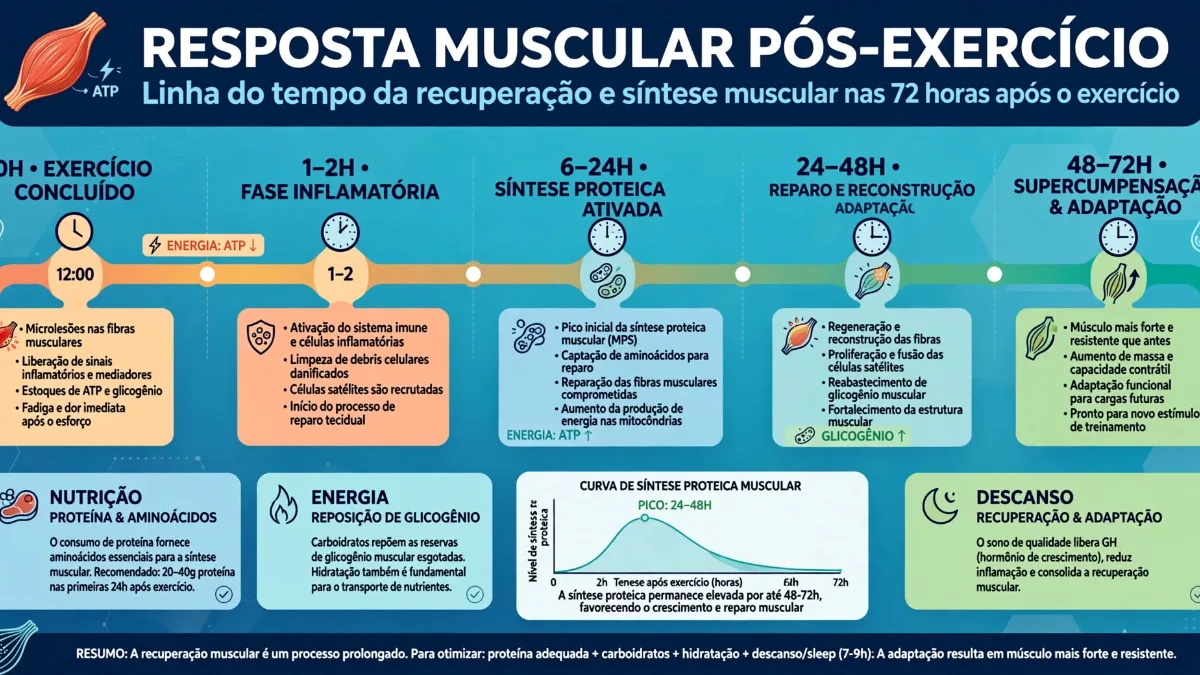
Visual representation of prolonged muscular responsiveness over several hours post-exercise.
If the stopwatch does not dictate your muscle gains, what truly governs hypertrophy? Scientific consensus is clear: the primary nutritional driver of muscle growth is your total daily protein intake. Think of muscle building as constructing a brick house. Amino acids are the bricks consumed over 24 hours. Stacking every single brick into a solitary hour in the afternoon achieves nothing if you run out of building materials for the rest of the week.
Current clinical guidelines recommend a total daily intake between 1.6 and 2.2 grams of protein per kilogram of body weight (approximately 0.73 to 1.0 g/lb) for individuals seeking to maximize muscle protein synthesis and lean mass gains. Hitting this daily target is exponentially more critical than stressing over the precise minute you consume your shake. A vital clinical caveat: exceedingly high protein diets should be monitored by qualified healthcare professionals, particularly for individuals with pre-existing renal disease or hepatic impairment.
Furthermore, supplements such as whey protein are convenient dietary tools, but by no means mandatory. The cornerstone of your nutritional strategy should always be whole, nutrient-dense foods rich in high-biological-value protein, such as eggs, lean meats, dairy, fish, and legumes. Supplements serve merely to bridge logistical gaps during a hectic schedule, not as a source of biological magic.
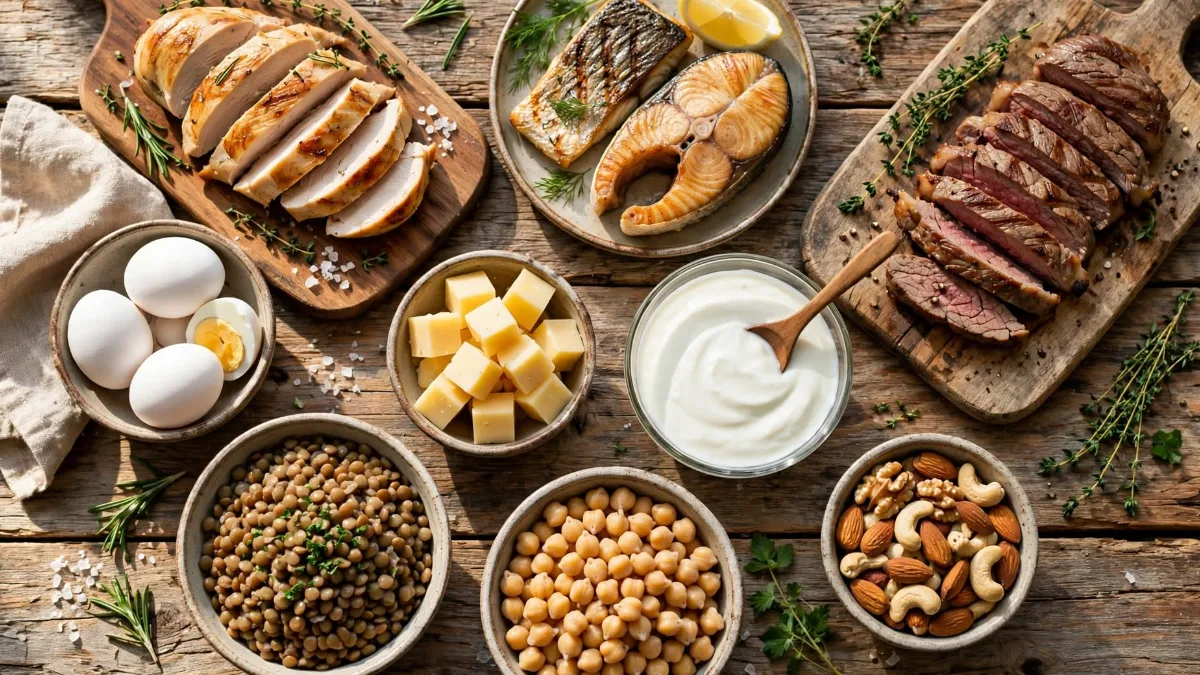
A balanced arrangement of varied whole-food protein sources on a table.
If timing is secondary, why do so many athletes report feeling better when eating promptly after a session? The answer depends heavily on your baseline nutritional state—specifically, whether you began your workout fed or fasted. If you belong to the group that prefers early-morning fasted training, the biological equation shifts.
When training without having eaten for several hours, circulating amino acid pools are depleted and net muscle protein balance is negative, leaving the body under heightened metabolic stress. In this specific context, consuming protein promptly post-workout transitions from an optional perk to a recommended priority. It halts muscle catabolism and signals the cellular machinery to commence tissue repair and remodeling.
Conversely, if you consumed a balanced, protein-containing meal 1 to 3 hours prior to stepping into the gym, those nutrients are still being systematically digested and absorbed. In that scenario, urgency evaporates entirely. Your muscles remain well-nourished throughout your training session, allowing you to shower and relax before sitting down for your next scheduled meal.

An athlete preparing for a morning training session, reviewing nutritional strategy.
Now that we know total daily intake is king and the recovery window extends across hours, how should you distribute these structural building blocks throughout your day? Consuming your entire daily protein quota in one massive evening feast is not optimal for maximizing the body's growth pathways.
Research demonstrates an optimal threshold for activating the mTORC1 pathway—the primary molecular trigger for cellular protein synthesis—per feeding. The practical guideline is approximately 0.4 to 0.5 grams of high-quality protein per kilogram of body weight per meal. Spacing your total intake across 4 to 5 meals throughout the day produces recurring, robust spikes in muscle protein synthesis, sustaining an anabolic cellular environment.
This balanced distribution not only optimizes muscular adaptations but also prevents gastrointestinal discomfort associated with excessively large, hyper-concentrated protein meals. It offers a pragmatic, humanized, and sustainable framework that supports your training without imposing unnecessary rigid timelines on your social life.

Nutrient-dense meal prep containers illustrating optimal protein distribution across the day.
The evidence frees you from the tyranny of the locker-room countdown. The anabolic window certainly exists, but it is not a 30-minute crack that slams shut in your face. It is a wide-open gate lasting several hours—with elevated metabolic sensitivity echoing for up to two full days following intense resistance training.
The secret to transforming your physique does not lie in frantically guzzling a shaker bottle with trembling hands, but in day-to-day consistency: hitting your daily protein target through sensible meal distribution, lifting with progressive overload, prioritizing restorative sleep, and respecting biological recovery. Let go of nutrition-induced anxiety; fueling your body should be empowering and enjoyable, not an exercise in chronic stress.
Every physiology responds uniquely. For tailored dietary adjustments or personalized supplementation protocols, consult a registered dietitian or sports physician. Modern science exists to simplify your lifestyle, not encumber it with arbitrary rules.

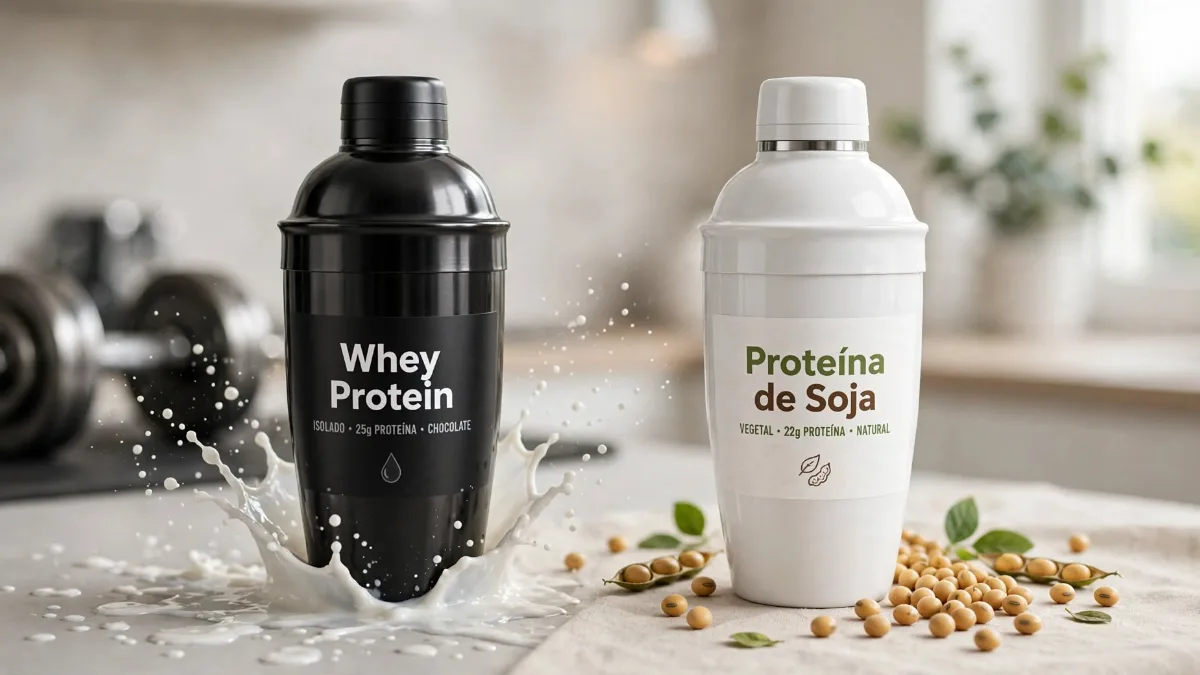
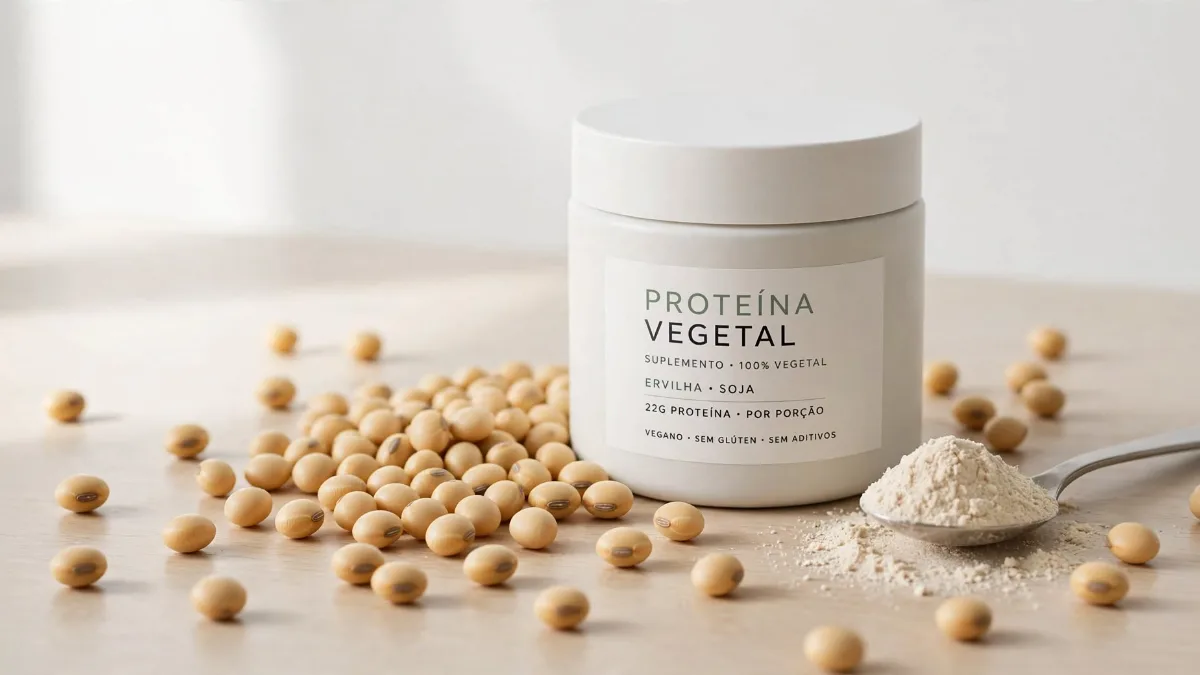
💪 O 100% Pure Whey Zero Lactose da Probiótica oferece proteína de alta qualidade e é ideal para quem deseja complementar a alimentação sem consumir lactose.
Aviso de Saúde
O conteúdo deste artigo é puramente informativo e educacional, baseado em pesquisas publicadas. Ele não substitui o aconselhamento, diagnóstico ou tratamento médico profissional. Consulte sempre um médico ou nutricionista antes de realizar mudanças na sua dieta, treino ou suplementação.
Criador do Metaboliza, focado em simplificar a ciência da nutrição, metabolismo e biohacking para uma vida de alta performance.
Participe da discussão com a comunidade do Metaboliza