
Módulos & Calculadoras[01]
Calculadora de IMC
Calculadora de TMB & GET
Calculadora de Macronutrientes
Calculadora de Hidratação
Discover the real differences between the classic dairy supplement and the plant-based alternative for muscle mass gain, metabolism, and health.
Editor e Criador do Metaboliza
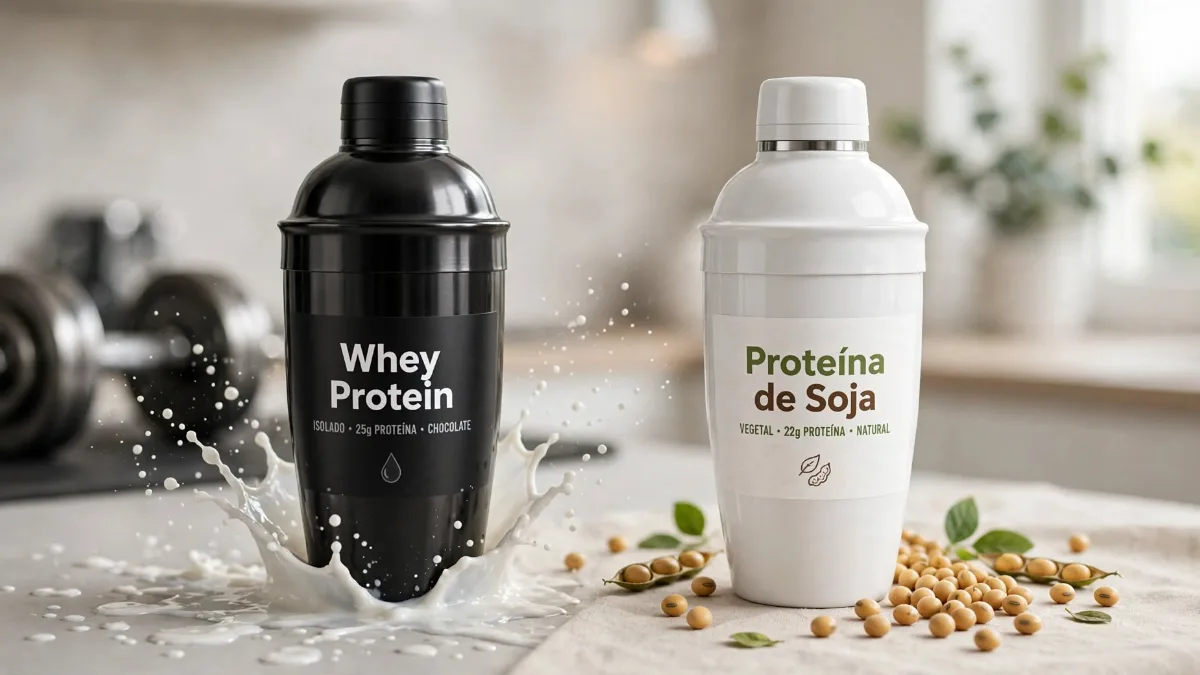
Shaker bottles side by side representing the choice between Whey Protein and Soy Protein.
When it comes to optimizing your metabolism, losing weight healthily, or building muscle mass, protein takes center stage on your plate and in your shaker. It is not only the building block of our tissues, but also a nutrient that requires more energy from the body to be digested—the famous thermic effect of food. However, stepping into a supplement store or browsing the internet brings up a dilemma that paralyzes many people: after all, which path should you follow when choosing the ideal supplement?
On one side, we have Whey Protein, the undisputed darling of fitness enthusiasts for decades. On the other, isolated soy protein, which has gained momentum with the rise of plant-based diets and is carving out its well-deserved space. Both promise to help with recovery and physical performance, but opinions online often get mixed up with myths and exaggerated truths. Let's set the record straight and analyze the science behind each of these sources to help you make the best decision for your body and your wallet.
Extracted from whey during the cheese-making process, Whey Protein is considered a complete protein of the highest biological value. This means it delivers all essential amino acids—those our bodies cannot produce on their own—in the ideal proportions the organism needs to function at its peak.
The great advantage of Whey lies in its absorption speed and extremely high concentration of leucine, a branched-chain amino acid (BCAA) that acts as the ignition key for muscle protein synthesis. When you finish that heavy resistance workout, Whey acts rapidly in the bloodstream, providing the building blocks needed to repair micro-tears in muscle fibers. Furthermore, depending on the chosen version (concentrate, isolate, or hydrolysate), it can contain minimal amounts of carbohydrates and fats, fitting perfectly into weight loss or muscle-building strategies.
Many people turn their noses up at soy protein without knowing its true biochemical potential. The version used in supplementation is isolated soy protein, a highly purified ingredient that undergoes processes to remove most carbohydrates and fats, resulting in a powder with about 90% protein concentration.
According to data compiled and evaluated in nutritional research, isolated soy protein exhibits a digestibility of approximately 95%, placing it side by side with animal-based proteins in terms of utilization by the body. It also achieves the maximum score of 1.0 on the PDCAAS (Protein Digestibility Corrected Amino Acid Score), the World Health Organization's standard method for evaluating protein quality based on human amino acid requirements and digestibility.
Laying the cards on the table, how does soy stack up when compared directly to Whey Protein in terms of muscle mass gain? Current scientific consensus establishes that, in the short term, Whey Protein has the edge. This happens because Whey provides about twice as much available leucine per gram of protein compared to isolated soy protein, triggering a faster and higher peak of protein synthesis immediately after consumption.
However, when we look at the long term, the story changes. Rigorous meta-analyses published in the International Journal of Sport Nutrition and Exercise Metabolism have demonstrated that when resistance training practitioners consume an adequate daily amount of protein (equal to or greater than 1.6 g/kg/day) and maintain a consistent strength training program, muscle mass and strength gains are statistically similar, regardless of whether they used Whey or soy protein.
One of the biggest fears circulating in gyms is the assumption that consuming soy protein would reduce testosterone levels or cause feminizing effects in men due to the isoflavones present in the bean. It is essential to clarify this point based on solid scientific evidence to dispel any unnecessary alarmism.
The myth has been widely refuted by robust meta-analyses conducted by reference institutions, such as reviews published in the field of reproductive toxicology by the NIH (National Institutes of Health). These studies reviewed dozens of randomized clinical trials and concluded that neither soy nor isoflavone intake significantly affects male reproductive hormones—including total testosterone, free testosterone, or estradiol—even when consumed in high daily doses.
The final choice between Whey Protein and soy protein depends much more on your lifestyle, your budget, and your digestive system than on metabolic miracles. If you have no dietary restrictions regarding dairy and are looking for maximum post-workout convenience with slightly faster absorption, Whey Protein is an excellent ally.
On the other hand, if you are vegan, vegetarian, follow a plant-based diet, or have lactose intolerance or cow's milk protein allergy (CMPA), isolated soy protein comes in as a perfect solution. In addition to meeting your protein needs with excellence, it usually offers a much more attractive cost-benefit ratio than isolated Whey Protein, easing your monthly budget without compromising your gym gains.

💪 O 100% Pure Whey Zero Lactose da Probiótica oferece proteína de alta qualidade e é ideal para quem deseja complementar a alimentação sem consumir lactose.
Aviso de Saúde
O conteúdo deste artigo é puramente informativo e educacional, baseado em pesquisas publicadas. Ele não substitui o aconselhamento, diagnóstico ou tratamento médico profissional. Consulte sempre um médico ou nutricionista antes de realizar mudanças na sua dieta, treino ou suplementação.
Criador do Metaboliza, focado em simplificar a ciência da nutrição, metabolismo e biohacking para uma vida de alta performance.
Participe da discussão com a comunidade do Metaboliza