
Módulos & Calculadoras[01]
Calculadora de IMC
Calculadora de TMB & GET
Calculadora de Macronutrientes
Calculadora de Hidratação
Discover how the 'gentle art' transforms the body, accelerates metabolism, and requires heightened attention to your physical well-being.
Editor e Criador do Metaboliza
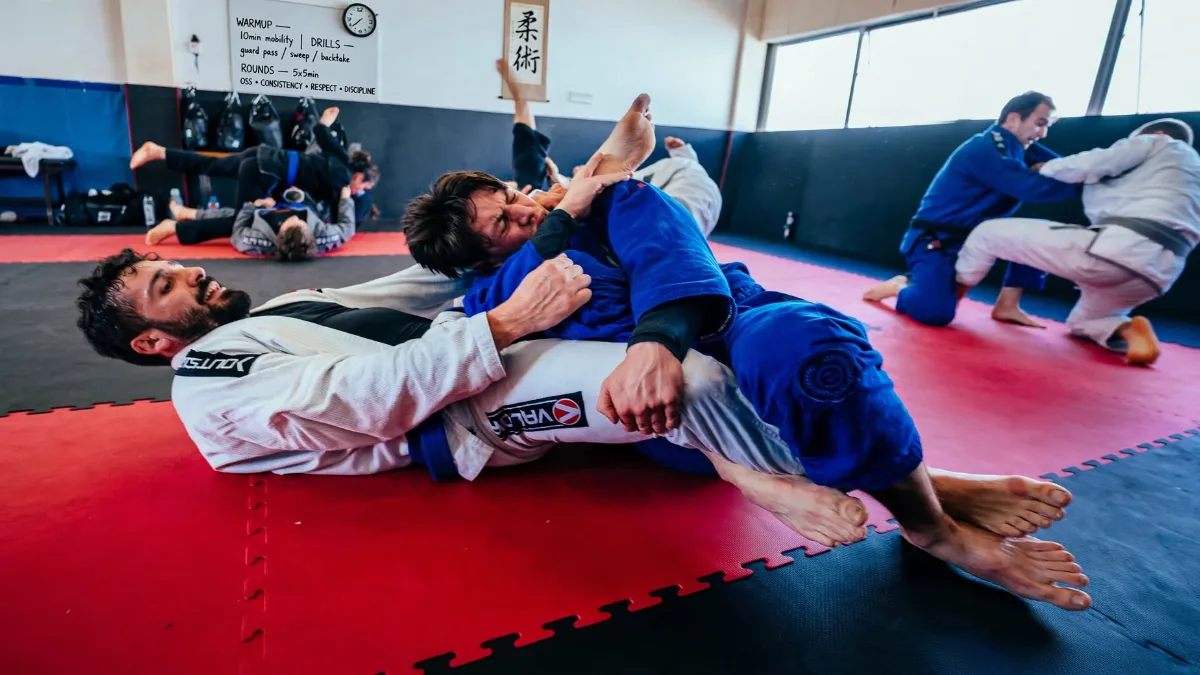
Jiu-jitsu practitioners during a high-intensity training session on the mats.
Brazilian Jiu-Jitsu, affectionately known as BJJ or the 'gentle art,' is a martial art focused on self-defense, ground control, leverage, and submissions. Unlike other combat sports based on striking with punches and kicks, jiu-jitsu allows a smaller and lighter person to use physics to their advantage to neutralize a larger opponent. But what started as a tool for combat efficiency quickly evolved into a global phenomenon for fitness, longevity, and community.
What draws so many people to the mats goes far beyond the promise of self-defense. Jiu-jitsu training demands absolute focus and problem-solving under physical and mental pressure—what many describe as 'human chess.' This combination of intense physical effort and mental strategy creates a highly addictive and therapeutic environment, allowing practitioners to disconnect from daily worries.
If you are keeping an eye on the scale or looking to boost your body composition, it is worth understanding how this modality moves your internal engine. From a physiological standpoint, jiu-jitsu functions like a natural high-intensity interval training (HIIT). Sessions alternate moments of extreme exertion—such as trying to sweep or pass the guard of a resistant partner—with brief periods of strategic pause or prolonged isometrics.
This intensity seesaw strongly stimulates oxidative metabolism and generates the so-called EPOC effect (excess post-exercise oxygen consumption). In plain English: your body continues burning energy at an accelerated rate even hours after you have showered and gone home. Systematic reviews on the physiological profile of practitioners show that average aerobic capacity (VO2max) typically ranges between 42 and 52 mL/kg/min, a level comparable to high-performance endurance sports.
One of the most common questions among those seeking the benefits of jiu-jitsu concerns actual energy expenditure. After all, how many calories does jiu-jitsu burn? Numbers vary according to body weight, sex, conditioning level, and, above all, the intensity of the 'sparring' (free fighting at the end of class). It is estimated that a typical session burns between 300 and 800 kcal, potentially reaching up to 1,000 kcal in very intense workouts by advanced athletes.
However, it is essential to keep your feet on the ground: jiu-jitsu helps with weight loss when combined with a caloric deficit and smart dietary choices. No martial art in the world has the power to cancel out the effects of an unregulated, hypercaloric diet. The sport builds strong muscles, improves insulin sensitivity, and optimizes fat burning, but the kitchen remains the primary driver of weight loss.
Practicing jiu-jitsu regularly transforms the body globally. Unlike traditional weight training, where movements are isolated, BJJ requires you to recruit virtually all muscle groups simultaneously. You gain functional strength, significantly improve hip and spine flexibility, and develop enviable core endurance to stabilize your torso under pressure.
Mentally, the benefits are equally transformative. The training mat acts as a true escape valve for modern stress. The necessity to focus on the present—after all, a momentary distraction can mean getting caught in a submission—functions as active meditation. Practitioners report significant improvements in self-confidence, emotional resilience in the face of frustration, and sleep quality.
Like any combat sport and close-contact physical activity, jiu-jitsu presents inherent risks. Epidemiological data and systematic reviews point to an average incidence of about 5.5 injuries per 1,000 hours of training. Most notably, an impressive 89% of these occurrences happen during routine training sessions—with 79% of them specifically occurring during free sparring when intensity spikes.
Statistics show that knees lead the ranking, representing about 25% of reported injuries, followed by shoulders at 13%. Sprains, strains, and dislocations are usually the result of rapid joint twisting, poorly cushioned falls, or excessive resistance to submissions (such as armlocks or kneebars) rather than yielding in time and tapping out.
To train safely and ensure longevity, certain precautions are non-negotiable: choose mindful training partners, leave your ego at the door (know when to tap out), warm up properly, and strengthen the muscles around vulnerable joints with a good complementary weight-training routine.
If you are thinking about taking your first step, know that jiu-jitsu for beginners might feel intimidating at first, but the vast majority of academies feature classes built on patience and gradual adaptation. The secret in the first few months is not trying to submit everyone, but rather learning to breathe, surviving uncomfortable positions, and understanding movement mechanics.
Additionally, mat hygiene is a public health issue among practitioners. Because the sport involves direct physical contact and heavy sweating, the risk of skin infections (such as ringworm, impetigo, and staph) is real if basic rules are ignored. Wash your gi after absolutely every training session, keep your fingernails and toenails trimmed, wear sandals off the mat, and never train if you have suspicious skin lesions.

Eleve Seu Desempenho e Conforto com a Camiseta Dry Fit Definitiva! Pensada para o homem que não abre mão da performance, a nossa Camiseta Dry Fit Masculina combina tecnologia e estilo para o seu dia a dia, treinos intensos ou atividades ao ar livre. Leveza e Conforto Superior: Com um toque macio e caimento perfeito, a camiseta proporciona a sensação de "segunda pele", garantindo total liberdade e flexibilidade de movimentos. Alta Respirabilidade: Permite a circulação eficiente do ar, ajudando a regular a temperatura corporal e prevenindo o superaquecimento. Durabilidade e Praticidade: Material resistente ao desgaste, ideal para lavagens frequentes e uso contínuo. Não amassa com facilidade e seca incrivelmente rápido!
Aviso de Saúde
O conteúdo deste artigo é puramente informativo e educacional, baseado em pesquisas publicadas. Ele não substitui o aconselhamento, diagnóstico ou tratamento médico profissional. Consulte sempre um médico ou nutricionista antes de realizar mudanças na sua dieta, treino ou suplementação.
Criador do Metaboliza, focado em simplificar a ciência da nutrição, metabolismo e biohacking para uma vida de alta performance.
Participe da discussão com a comunidade do Metaboliza