
Módulos & Calculadoras[01]
Calculadora de IMC
Calculadora de TMB & GET
Calculadora de Macronutrientes
Calculadora de Hidratação
Understand how this amino acid helps you power through those extra reps and why it causes that famous skin tingling sensation.
Editor e Criador do Metaboliza
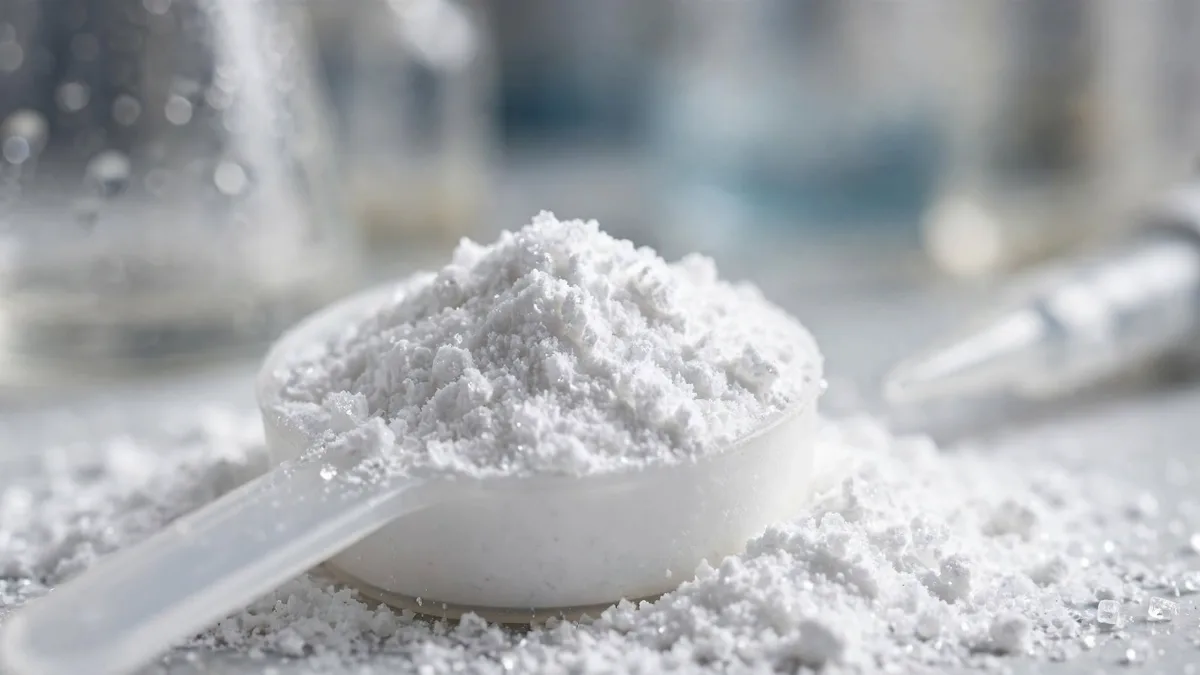
Beta-alanine is a cornerstone of modern high-performance supplementation.
If you frequent the gym or practice high-intensity sports, you've probably heard of beta-alanine. But contrary to popular belief, it is not a 'stimulant' like caffeine. Beta-alanine is a non-essential amino acid, meaning our body can produce it, but only in small quantities for those pursuing elite performance.
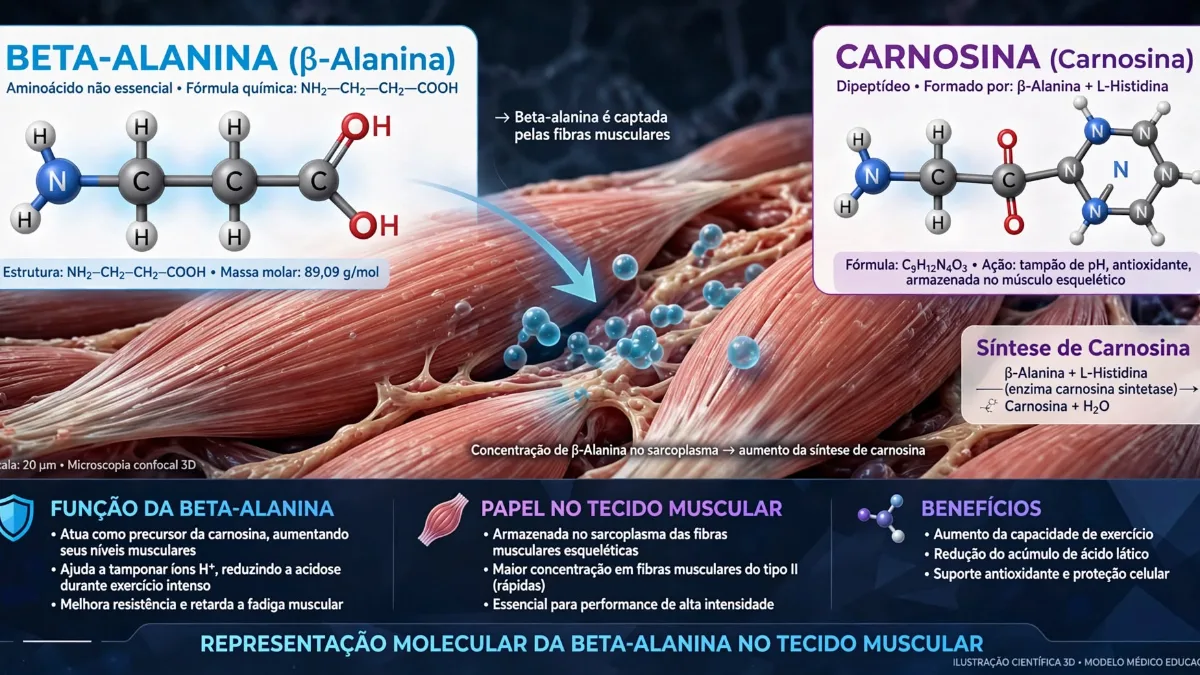
The real magic of beta-alanine happens inside muscle cells. It is the rate-limiting factor for producing a substance called carnosine. Imagine your muscles are a factory and carnosine is the cleanup crew. When you train hard, the 'factory' produces a lot of waste (hydrogen ions), which makes the environment acidic and causes the muscle to stop working. Beta-alanine ensures you have enough carnosine to clear out this waste and keep the factory running longer.
In metabolism, it does not enter protein synthesis like leucine or valine. Its function is purely regulatory and pH-balancing. Therefore, it is classified as an intracellular buffering agent, holding one of the highest levels of scientific evidence (Level A) according to the International Olympic Committee.
The main question for anyone coming to Metaboliza is: 'What is beta-alanine actually used for in practice?'. The short answer is: endurance. It is especially effective in exercises lasting between 1 and 4 minutes. Think of that set of 15 squat reps, a 400-meter sprint, or an intense round of boxing. Those are the moments when muscle acidity starts to kick in, and that is where beta-alanine shines.
Proven benefits include an increase in total workout volume (you can complete more sets with the same load) and a reduction in perceived exertion. This means that while the workout remains difficult, your body takes longer to reach total muscle failure.
Additionally, recent studies suggest that beta-alanine may help with recovery between sets, allowing you to maintain power output from the beginning to the end of your training session. However, it is important to emphasize: it does not directly burn fat and does not replace a well-adjusted diet.
Athlete maintaining high-intensity performance.
If you've ever taken beta-alanine and felt your ears, face, or hands 'prickling' or tingling, don't panic! This effect is technically known as paresthesia. It occurs because beta-alanine binds to certain nerve receptors in the skin, triggering a sensory feeling that might feel strange, but is entirely benign.
There is no evidence that this tingling causes nerve damage or any long-term health problems. It is merely a temporary reaction that usually appears about 15 to 20 minutes after ingestion and lasts for about an hour.
Many people even enjoy this sensation, using it as a psychological cue that the 'pre-workout has kicked in.' However, if it bothers you, the secret lies in how you consume it, as we will see next.
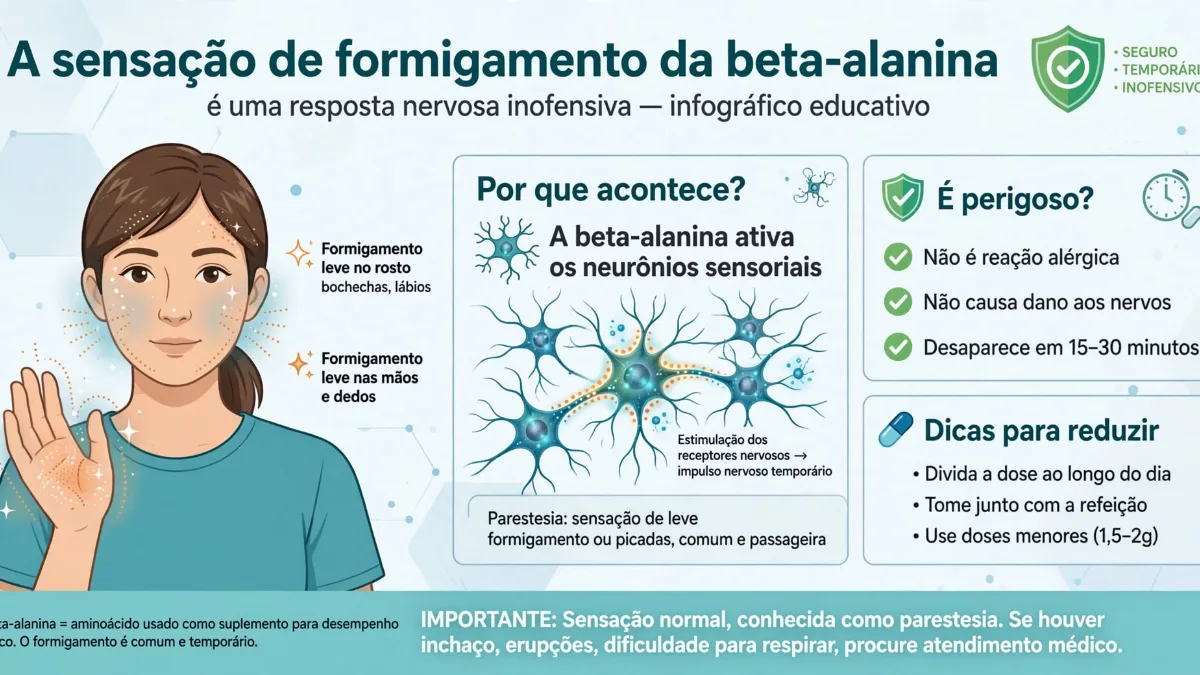
The tingling sensation is a harmless nervous response.
The beta-alanine dosage recommended by science for muscle saturation ranges between 3.2g and 6.4g per day. The crucial point here is: it must be taken every day, including on days when you do not train. The effect of beta-alanine is cumulative; you need to 'fill the tank' of carnosine in your muscles, which takes about 2 to 4 weeks.
To avoid intense tingling, the best strategy is fractionation. Instead of taking 5g all at once, divide it into smaller doses of 800mg to 1.6g throughout the day (for example: breakfast, lunch, snack, and dinner). This keeps levels stable and minimizes sensory discomfort.
The timing of ingestion does not alter effectiveness. Since the effect is chronic, you can take it whenever is most convenient for your routine, as long as you maintain daily consistency.
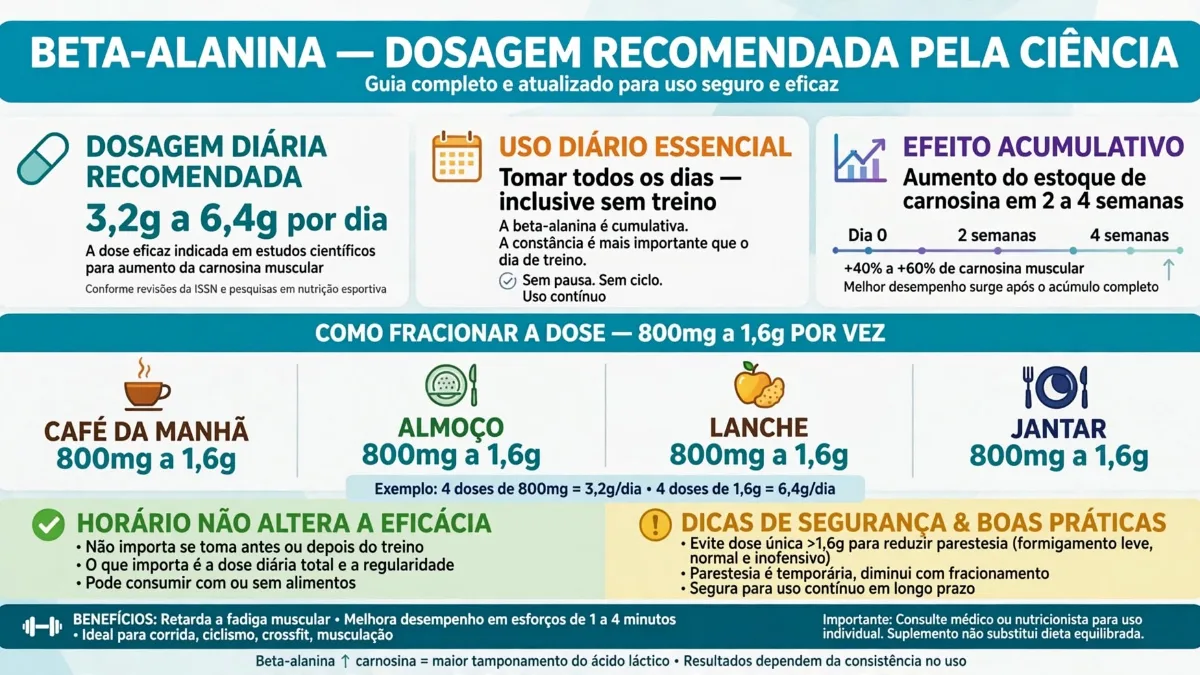
Fractionating doses is the key to comfort.
If there is a dynamic duo in the supplement world, it is beta-alanine and creatine. While creatine works primarily on the rapid energy system (ATP-CP) for strength and explosive efforts in very short bursts, beta-alanine steps in to sustain effort when creatine starts to deplete.
Studies show that combining the two can have a synergistic effect, improving body composition (more lean mass) and performance more efficiently than using each one in isolation. It's as if creatine gives you the strength to lift the weight and beta-alanine gives you the endurance to bang out three extra reps.
Both share the characteristic of being chronic-effect supplements. Therefore, if you decide to combine them, the focus should be on consistent daily intake of both, regardless of your workout schedule.
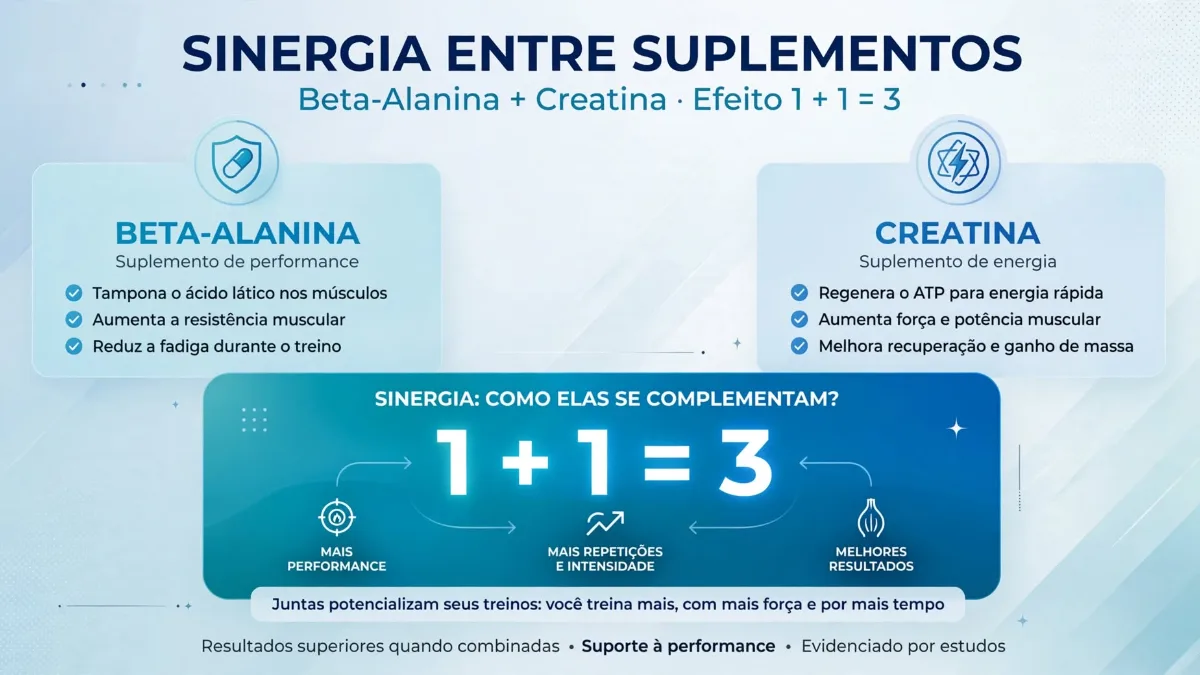
The synergy between supplements enhances results.
Beta-alanine is considered extremely safe for healthy adults when used at recommended doses. The only widely reported side effect is paresthesia (tingling), which we've already explained is harmless.
However, individuals with pre-existing medical conditions, pregnant women, or nursing mothers should always consult a physician or nutritionist before starting use. Furthermore, it is essential not to substitute a balanced diet and a structured training plan with supplement use.
Remember: supplements are the top of the pyramid. The foundation will always be rest, hydration, and real food. Beta-alanine is a powerful tool, but it works best when everything else is in order.

Always consult a healthcare professional.

✔ Aumenta a força e a resistência muscular; ✔ Potencializa a recuperação após treinos intensos; ✔ Eleva a energia e disposição para desempenho máximo; ✔ Auxilia no ganho de massa muscular magra. ✔ Ingrediente 100% puro e certificado.
Aviso de Saúde
O conteúdo deste artigo é puramente informativo e educacional, baseado em pesquisas publicadas. Ele não substitui o aconselhamento, diagnóstico ou tratamento médico profissional. Consulte sempre um médico ou nutricionista antes de realizar mudanças na sua dieta, treino ou suplementação.
Criador do Metaboliza, focado em simplificar a ciência da nutrição, metabolismo e biohacking para uma vida de alta performance.
Participe da discussão com a comunidade do Metaboliza