

Módulos & Calculadoras[01]
Calculadora de IMC
Calculadora de TMB & GET
Calculadora de Macronutrientes
Calculadora de Hidratação
Is breaking a sweat on an empty stomach the secret to burning more fat, or just another fitness myth?
Criador do Metaboliza & Autor

Person walking outdoors at sunrise, representing the practice of morning exercise.
You know that classic routine of getting out of bed early in the morning, putting on your sneakers, and heading straight to the treadmill or outdoors without eating a single thing? That is the famous fasted cardio, or simply fasted aerobic exercise. The idea behind the practice seems straightforward: since you've spent hours sleeping and your hepatic glycogen stores (our quick energy reserves) are lower, the body would be forced to seek fuel directly from adipose tissue.
However, the human body doesn't work like a simple calculator. When we wake up, our insulin levels are naturally low, and regulatory hormones like cortisol and adrenaline give us that extra push to wake up. In this scenario, the body does indeed rely on a higher percentage of fat to fuel immediate physical exertion. This is what we call acute lipid oxidation.
Yet, looking solely at the moment of exercise is like trying to understand the plot of a movie by watching only five minutes of it. Metabolism operates in 24-hour cycles. What your body burns or doesn't burn during an hour of exercise is just one piece of a much larger puzzle that involves total caloric expenditure, rest, and nutrition throughout the entire day.

Minimalist indoor setting illuminated by morning light, setting the stage for physical activity.
This is the million-dollar question. After all, does fasted cardio burn more fat than doing the exact same activity while fed? The short, direct, and evidence-based answer is: not necessarily. Meta-analyses of randomized clinical trials comparing groups that train in a fasted state versus groups that eat beforehand often surprise those who blindly trust miraculous promises.
Systematic reviews published in major journals, such as the British Journal of Nutrition, demonstrate that while fat burning during a fasted session is indeed statistically higher (about 20% to 30% higher during that specific window), long-term body fat loss (over periods of 4 weeks or more) shows no significant difference when the daily caloric balance remains the same.
In practical terms: if you burn more fat during fasted exercise, your body tends to compensate later by burning slightly less fat (or more carbohydrates) in the hours that follow. The decisive factor for losing weight and body fat remains the caloric deficit at the end of the day—not the clock or whether or not you ate a banana before putting on your shoes.
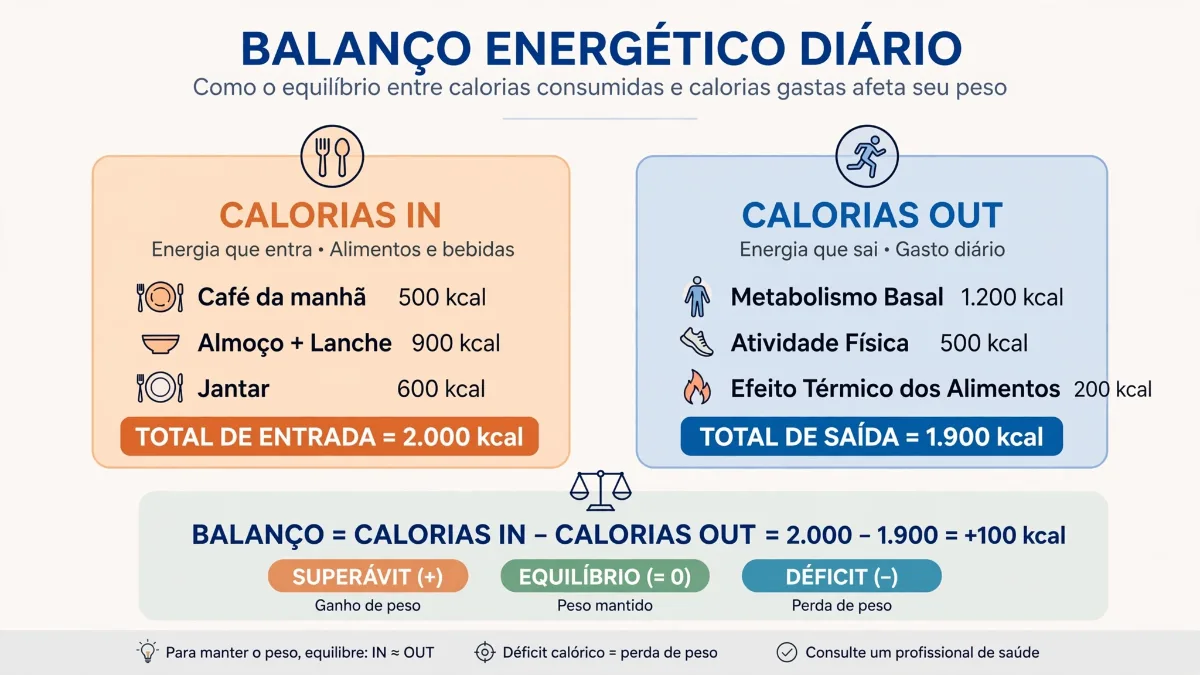
Clean conceptual chart representing daily energy balance.
Whenever a fitness topic gains popularity, myths and exaggerations spread faster than Olympic sprinters. One of the biggest fears for those considering the practice is the idea that fasted cardio uncontrollably burns lean mass. The truth is that as long as intensity is kept at appropriate levels and your daily protein intake is sufficient, your body won't 'melt' your muscles just because you walked on an empty stomach.
Another recurring myth is the promise that fasted cardio eliminates spot fat—that unwanted lower belly pooch or love handles. Unfortunately, genetics dictates which areas the body decides to store or draw fat from first. Exercise mobilizes lipids from the bloodstream globally, rather than from a specific localized fat deposit.
Finally, it is worth debunking the idea that the method is mandatory for anyone seeking muscle definition. It is simply a methodological tool. If you feel good training in a fasted state and it fits your routine, great. If you feel sick, dizzy, or prefer to perform better by eating something light beforehand, your final results will be equivalent as long as your diet and training are aligned.
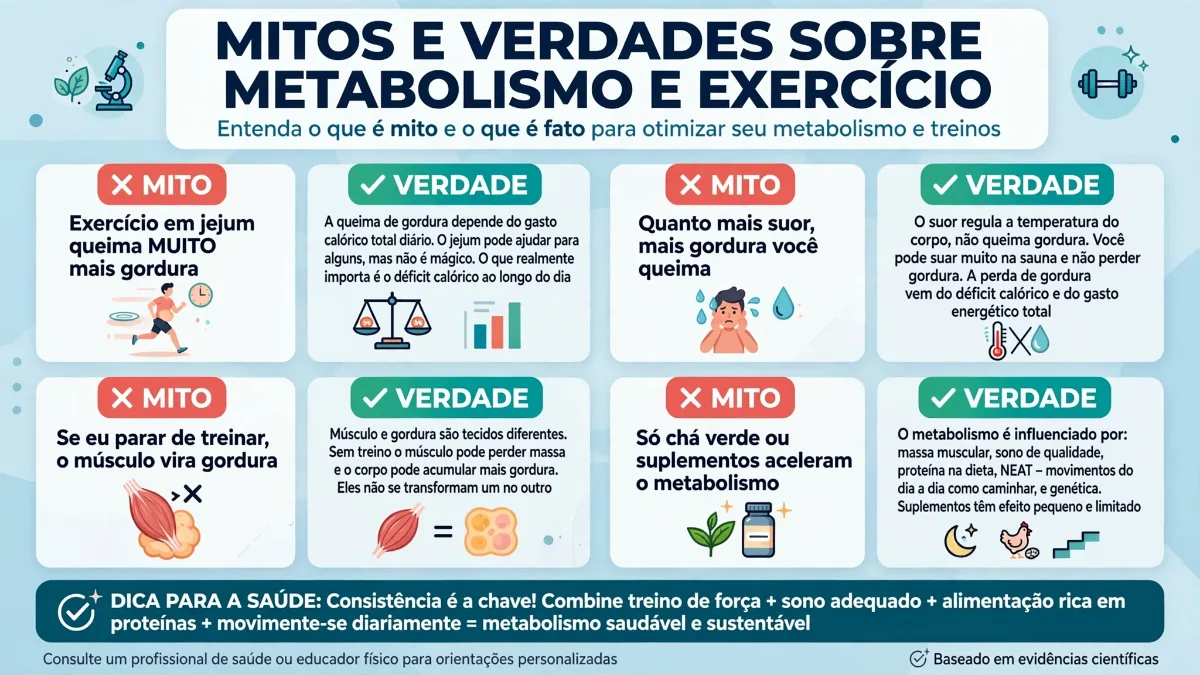
Conceptual illustration addressing myths and truths about metabolism and exercise.
If you've decided to test the practice, the golden rule is clear: low to moderate intensity. This is not the day to try breaking speed records on the treadmill or do max-effort high-intensity interval training (HIIT) without fuel in circulation. The ideal scenario for fasted cardio is working within the so-called FatMax Zone, which generally falls between 50% and 65% of your Maximum Heart Rate.
This means the activity should be comfortable enough for you to hold a conversation without extreme shortness of breath. A brisk walk, a light jog, or a moderate bike ride are classic examples. As for duration, sessions ranging between 30 and 45 minutes are usually more than enough to capture the logistical and practical benefits of morning training without overstressing the physical body.
Always remember to keep a water bottle nearby. Water loss during sleep is common, and starting exercise without proper hydration can increase the risk of dizziness and decreased performance.
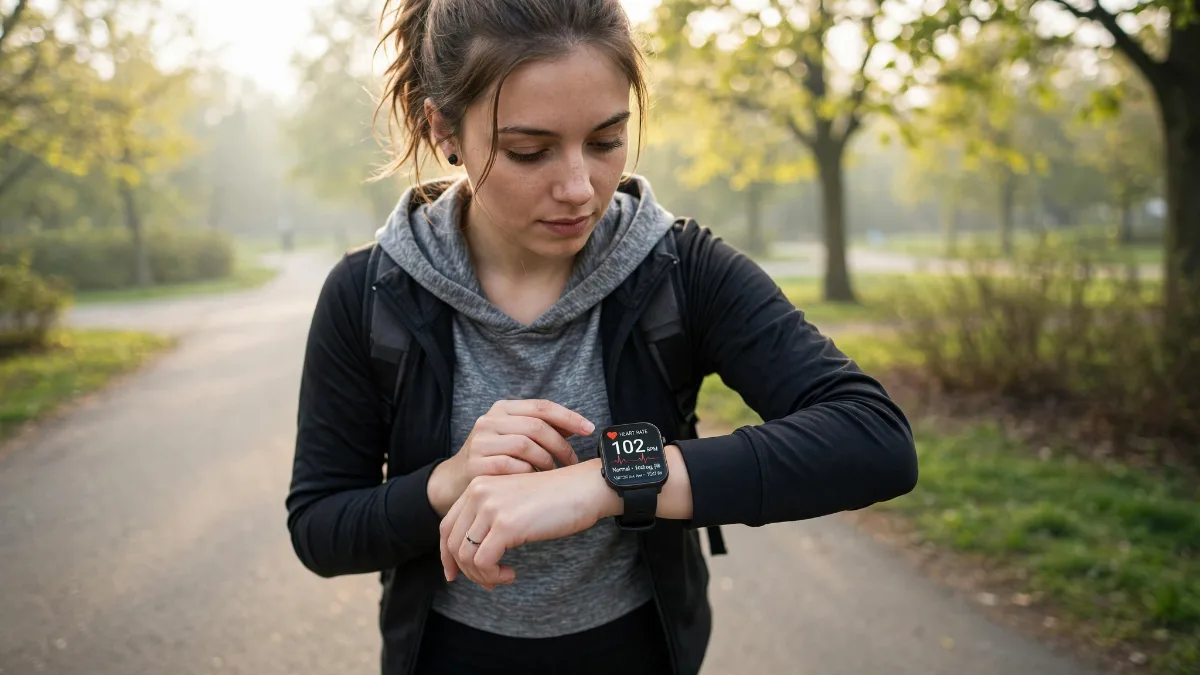
Person monitoring heart rate on a smartwatch during a light walk.
While considered safe for healthy individuals, fasted cardio is not for everyone. The primary warning applies to people with a predisposition to hypoglycemia, sudden drops in blood pressure, lightheadedness, or vertigo. Forcing the body to exercise without energy can lead to sudden malaise.
Individuals with pre-existing health conditions—especially diabetes mellitus or cardiovascular issues—must consult a physician or endocrinologist before starting any protocol involving prolonged fasting or changes in their workout routine. Guidelines from major diabetes associations emphasize that blood glucose management requires extra care during exercise.
Additionally, it is crucial to issue an important warning regarding your relationship with food: extreme restrictive practices or using fasting as a punishment for dietary overindulgences can trigger or worsen eating disorders. Mental health and a healthy relationship with your own body always come first.

Welcoming clinical setting symbolizing the importance of professional guidance.
The workout is over, now what? What to eat after fasted cardio often generates a lot of questions. Although the famous 'fast' ends with the physical activity, you don't need to frantically sprint to the kitchen within the first thirty seconds of stopping your workout, unless you are extremely hungry or need to start your daily activities immediately.
The ideal approach is to eat a balanced meal combining good sources of high biological value protein (such as eggs, chicken, yogurt, or tofu) with quality carbohydrates (such as oats, fruit, or whole-grain bread) to replenish glycogen stores and jumpstart proper muscle recovery.
If you train very early and can only have a full meal later on, a light snack right after exercise perfectly fulfills the role of nourishing your body and restoring your energy to tackle the rest of the day with vitality.

Nutritious breakfast bowl with fruit, yogurt, and oats.

Treine com estilo, conforto e potência. Sua academia particular começa aqui!
Aviso de Saúde
O conteúdo deste artigo é puramente informativo e educacional, baseado em pesquisas publicadas. Ele não substitui o aconselhamento, diagnóstico ou tratamento médico profissional. Consulte sempre um médico ou nutricionista antes de realizar mudanças na sua dieta, treino ou suplementação.
Entusiasta de nutrição e biohacking, focado em simplificar a ciência da saúde.
Participe da discussão com a comunidade do Metaboliza