

Módulos & Calculadoras[01]
Calculadora de IMC
Calculadora de TMB & GET
Calculadora de Macronutrientes
Calculadora de Hidratação
Ever get the feeling your body suddenly slowed down? Here is what is behind it (and how to turn things around stress-free).
Criador do Metaboliza & Autor
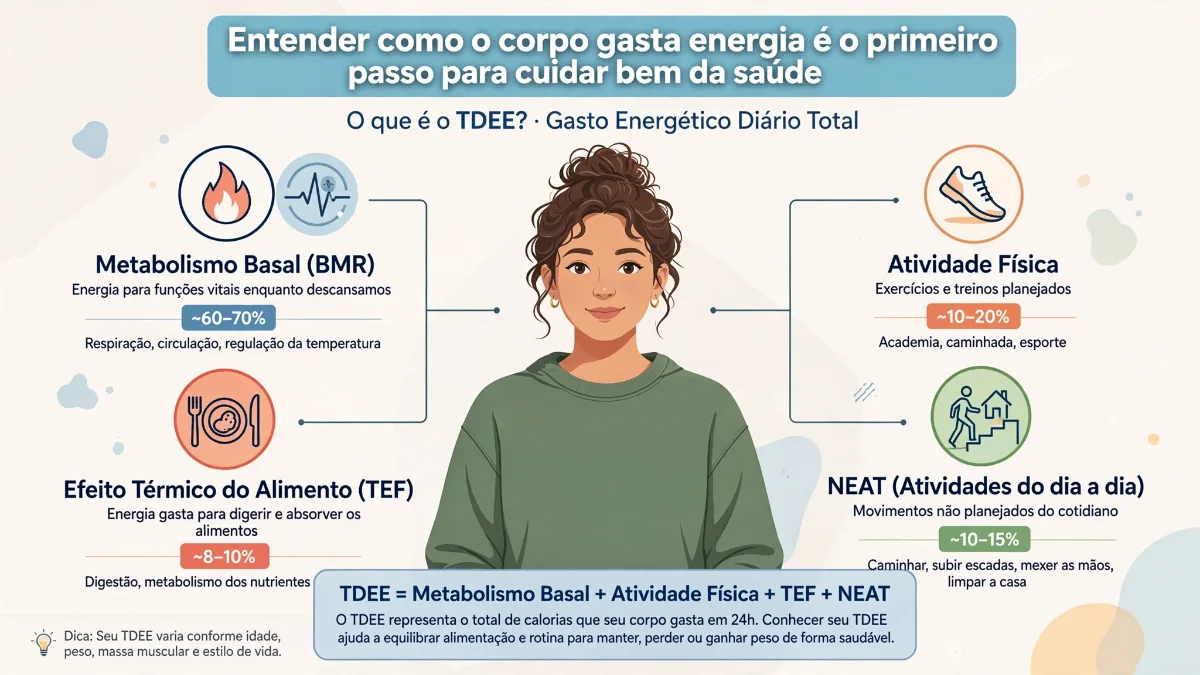
Understanding how the body burns energy is the first step to taking good care of your health.
You know that perfect machine running in the background of your body? That is your metabolism. It is simply the set of all chemical reactions that keep you alive. This ranges from pumping blood and breathing to digesting that weekend pizza.
According to concepts consolidated by the Mayo Clinic and Harvard research, our total energy expenditure is divided into three pillars: Basal Metabolic Rate (what we burn just to exist at rest), the Thermic Effect of Food (the energy used to chew, digest, and process what we eat), and Physical Activity.
There is a huge myth that some people are born with a 'broken' metabolism that never changes. Modern science shows the opposite: metabolism is extremely adaptable. When it slows down, most of the time it is not a defect—it is your body trying to protect you from some external stress, such as a lack of food or rest.
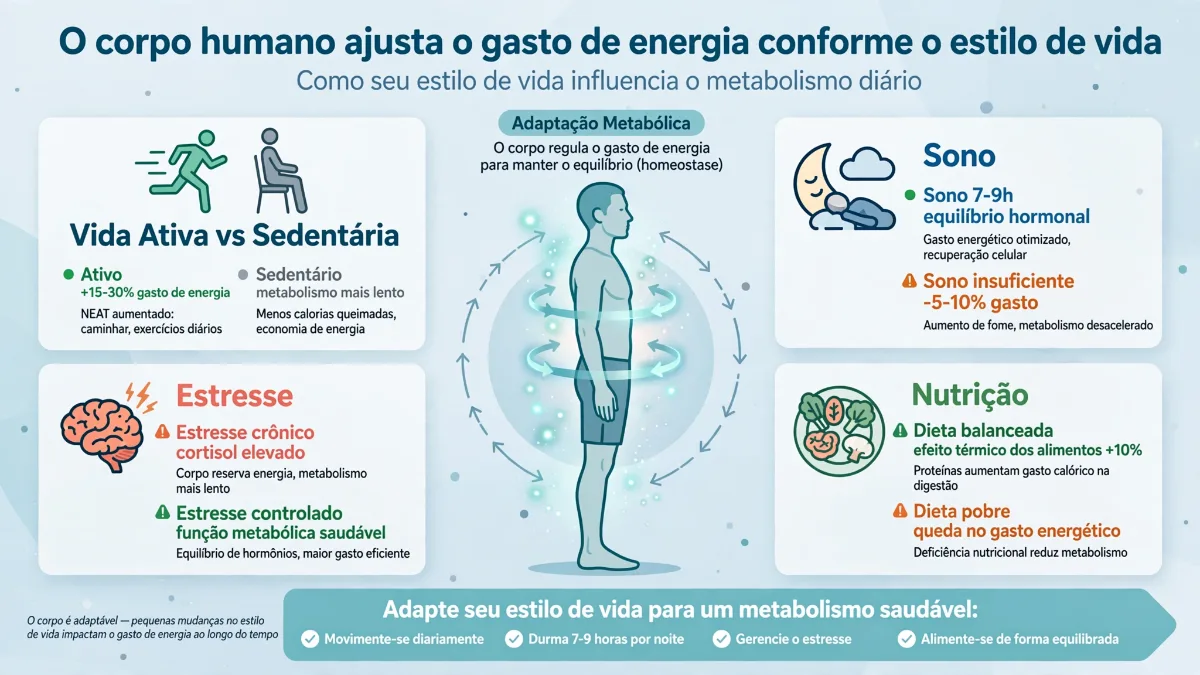
The human body adjusts energy expenditure according to lifestyle.
We live in a culture that often glorifies 'shutting your mouth' to see quick results on the scale. The problem is that our body does not understand that you want to fit into those old jeans; it understands that you are experiencing a food shortage.
When you drastically cut calories or skip meals all day, the body enters a survival mode known in science as adaptive thermogenesis. In other words: it reduces caloric expenditure to ensure you do not burn the little energy you are receiving. Furthermore, highly restrictive diets usually sacrifice precious lean mass, which is precisely the tissue that consumes the most energy.
According to analyses published in the Journal of the International Society of Sports Nutrition, this adaptation is a brilliant evolutionary mechanism for survival in times of famine, but a major obstacle for anyone seeking health and well-being today.
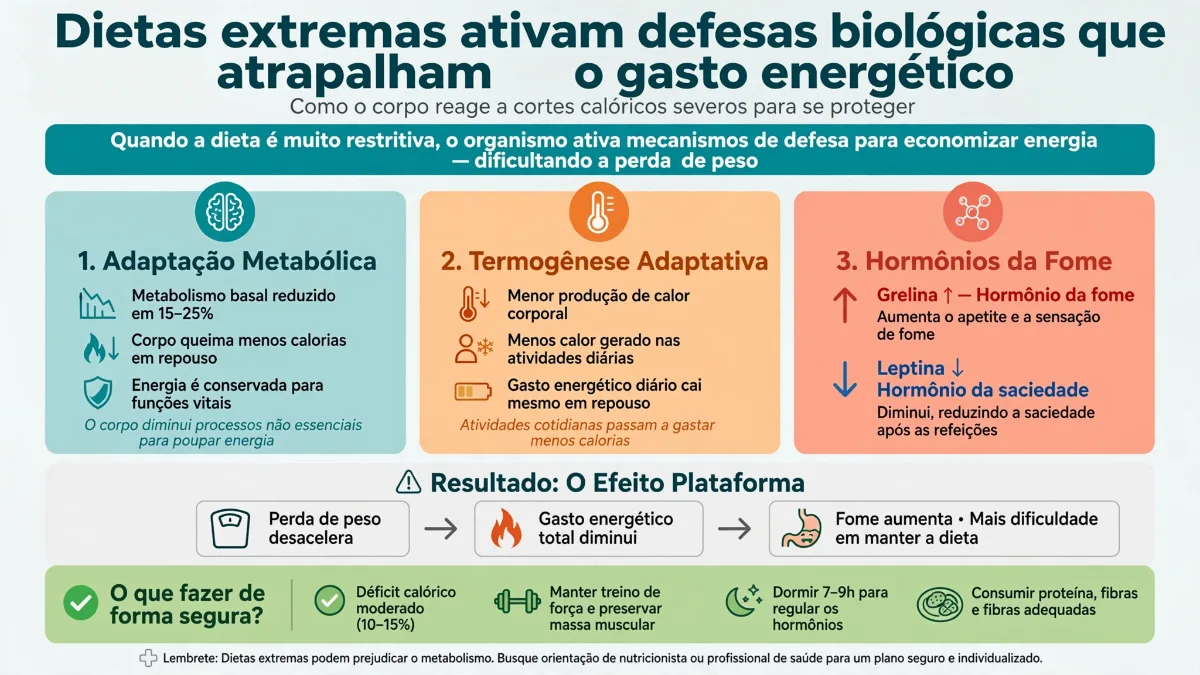
Extreme diets trigger biological defenses that hinder energy expenditure.
Sleeping little does not just affect your mood the next day or your ability to focus at work. Chronic sleep deprivation deeply messes with the hands of your biological clock and the way your body manages energy.
Detailed studies by the National Institutes of Health (NIH) show that poorly slept nights alter crucial hormones like ghrelin (which stimulates appetite) and leptin (which signals that you are full). In addition, sleep-deprived bodies tend to become less efficient at utilizing glucose.
Data from controlled research indicate that sleep deprivation can negatively impact metabolic rate and total energy expenditure, reflecting the biological exhaustion of the organism.
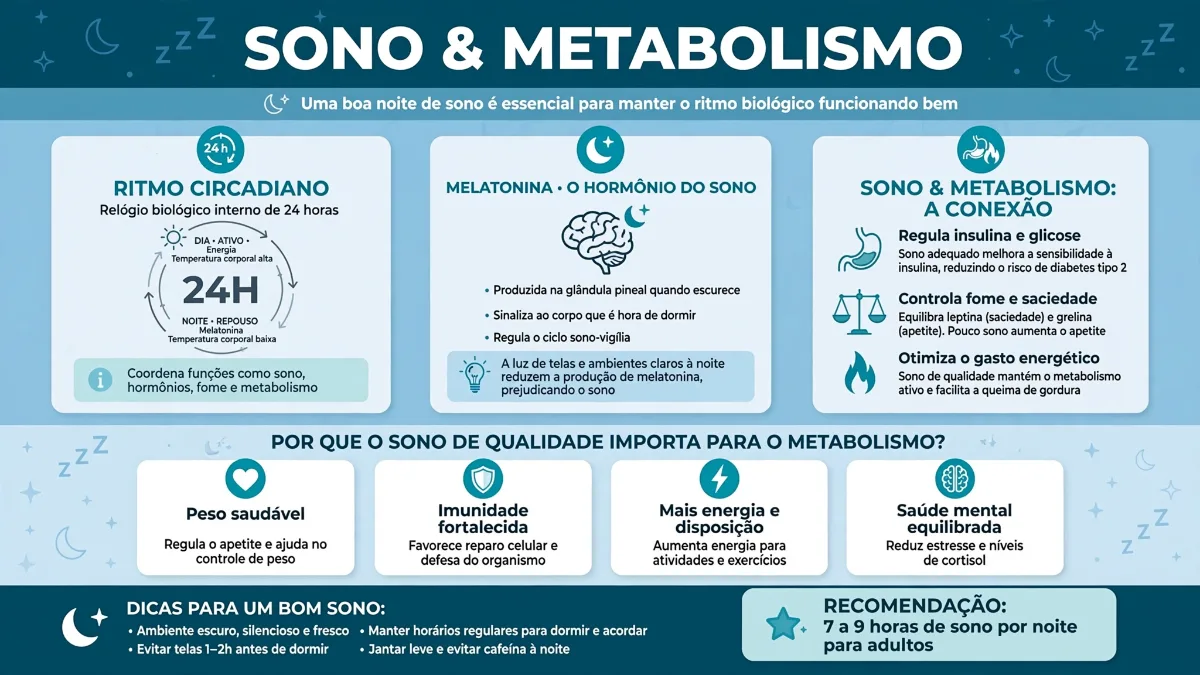
A good night's sleep is essential to keep the biological rhythm running smoothly.
It sounds like motherly advice, but there is a lot of chemistry behind the water bottle on your desk. Our body is composed mostly of water, and virtually all metabolic reactions—including calorie burning and protein synthesis—happen in an aqueous environment.
When you become even mildly dehydrated, the body has to juggle to maintain homeostasis (internal balance). This can cause your metabolism to function more slowly and less efficiently.
Moreover, it is super common to confuse the sensation of thirst with that sudden urge to snack on something sweet. Staying hydrated helps give your body a boost to run smoothly, not to mention the benefits for skin, mood, and digestion.
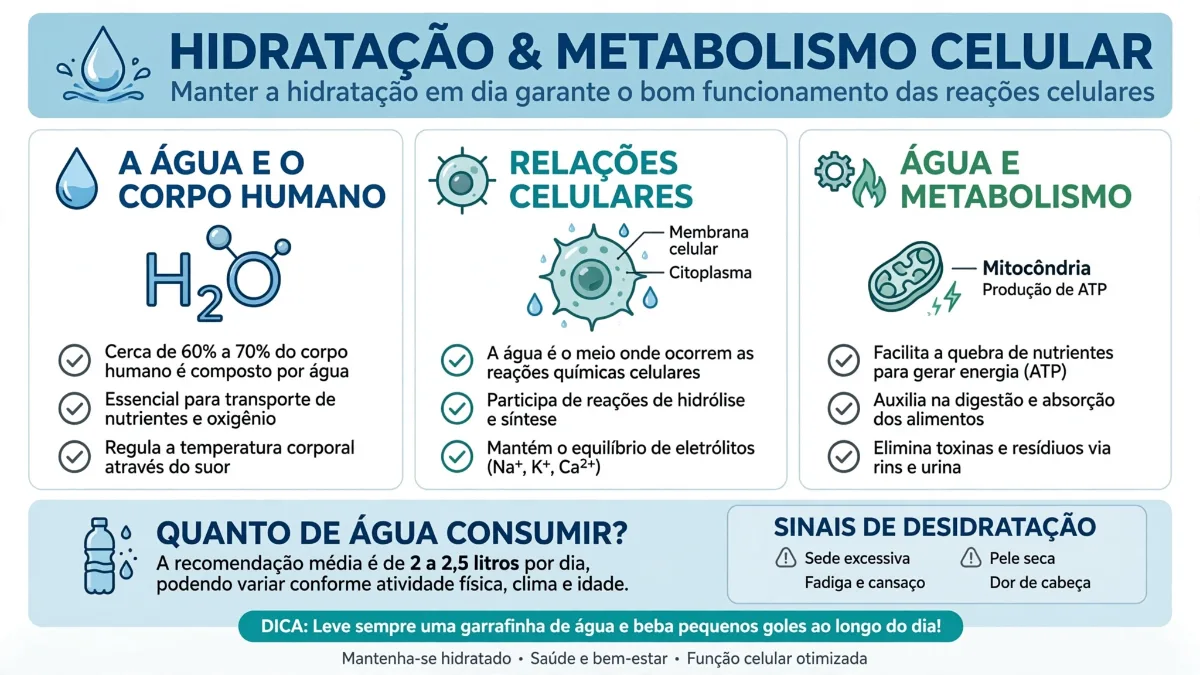
Keeping up with hydration ensures proper cellular reactions.
We spend a good part of the day working in front of the computer, then in the car or public transportation, and another large chunk on the couch watching a TV series. This prolonged routine of inactivity has a technical name: sedentary behavior.
A sedentary lifestyle goes far beyond not going to the gym; it encompasses how much we move throughout the day. When we stay still for hours, the electrical activity of the muscles drops drastically, which reduces calorie burning and affects glucose and fat metabolism.
It is not about becoming an athlete overnight, but rather breaking up these long blocks of immobility with short walks around the house or stretching your legs.
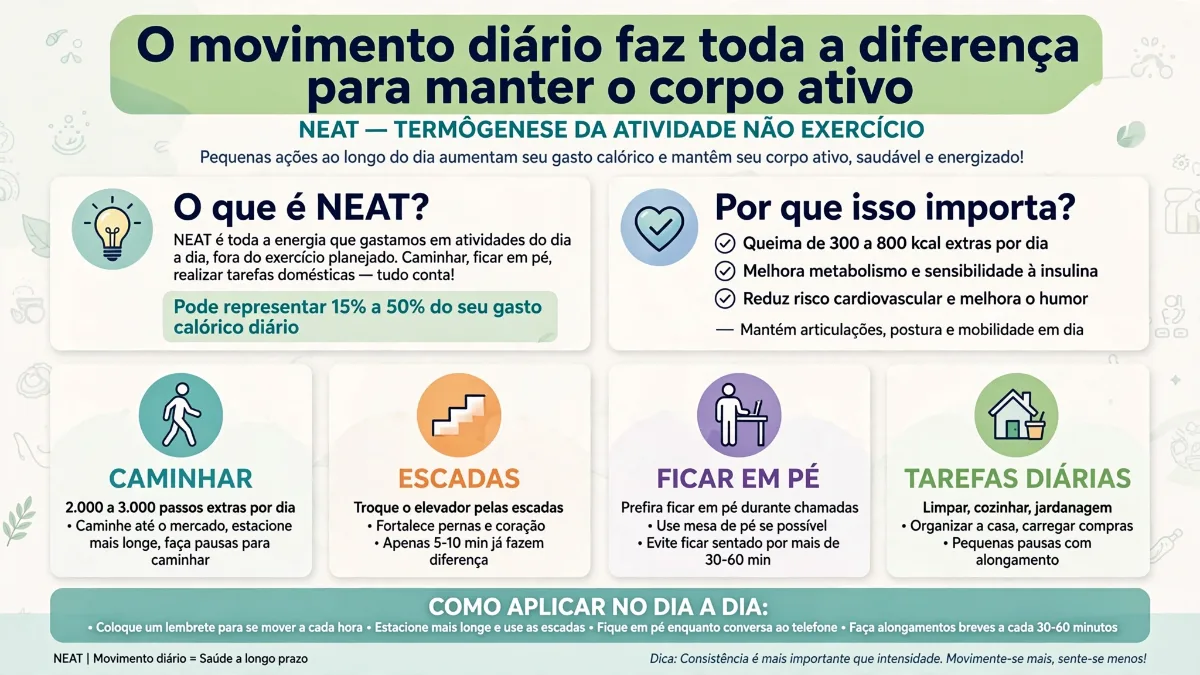
Daily movement makes all the difference in keeping the body active.
If there is a golden secret to keeping your metabolism active over the years, it is muscle mass. Many people are afraid of lifting weights or doing resistance exercises, thinking it is exclusively for those who want to get huge. But the reality is quite different.
Muscles are highly active tissues. Comparative data frequently point out that muscle tissue consumes more energy at rest than adipose tissue (fat), although exact estimates may vary depending on individual factors like age, sex, and hormonal profile.
As we age, it is natural to lose some lean mass if we do nothing to stimulate it (a process called sarcopenia). That is why including strength training in your routine is true life insurance for your metabolism.
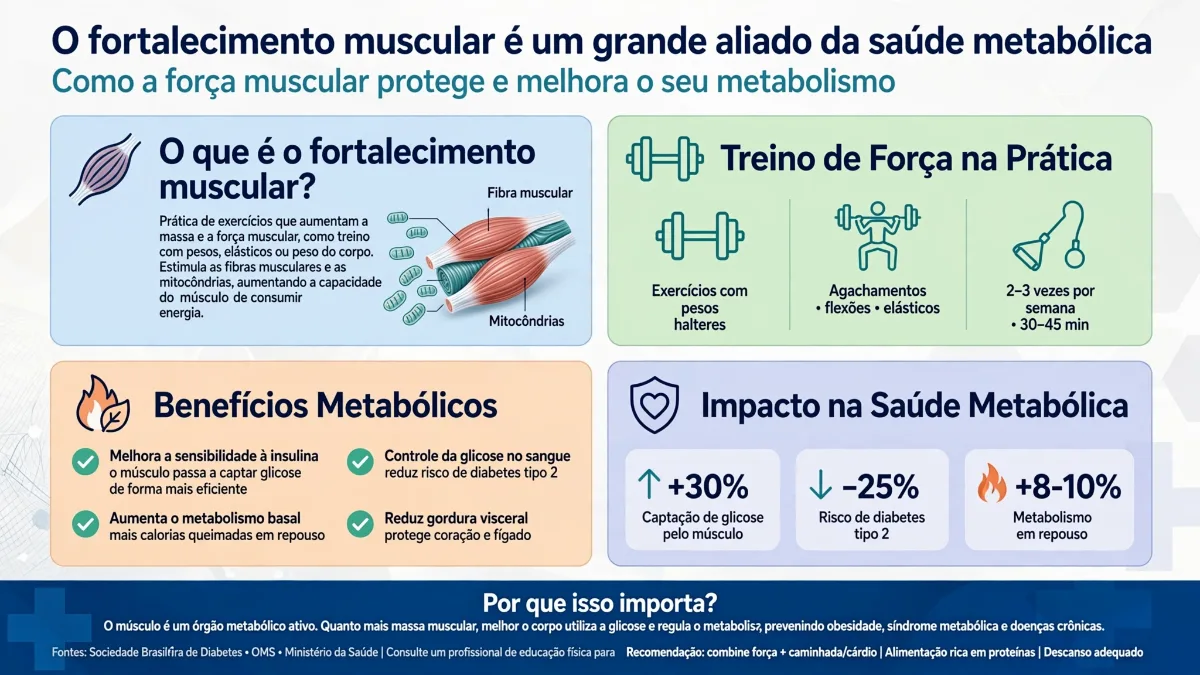
Muscle strengthening is a major ally of metabolic health.
No one is here to ban Sunday sweets, but daily and excessive consumption of refined sugar and ultra-processed products heavily messes with our metabolic system.
Foods full of added sugars and bad fats cause rapid spikes in blood glucose and insulin. Over time, this constant roller coaster can decrease cells' sensitivity to insulin, making it harder for the body to handle energy from food.
Additionally, ultra-processed foods require much less energy from our bodies to digest than whole or minimally processed foods, which reduces the Thermic Effect of Food.
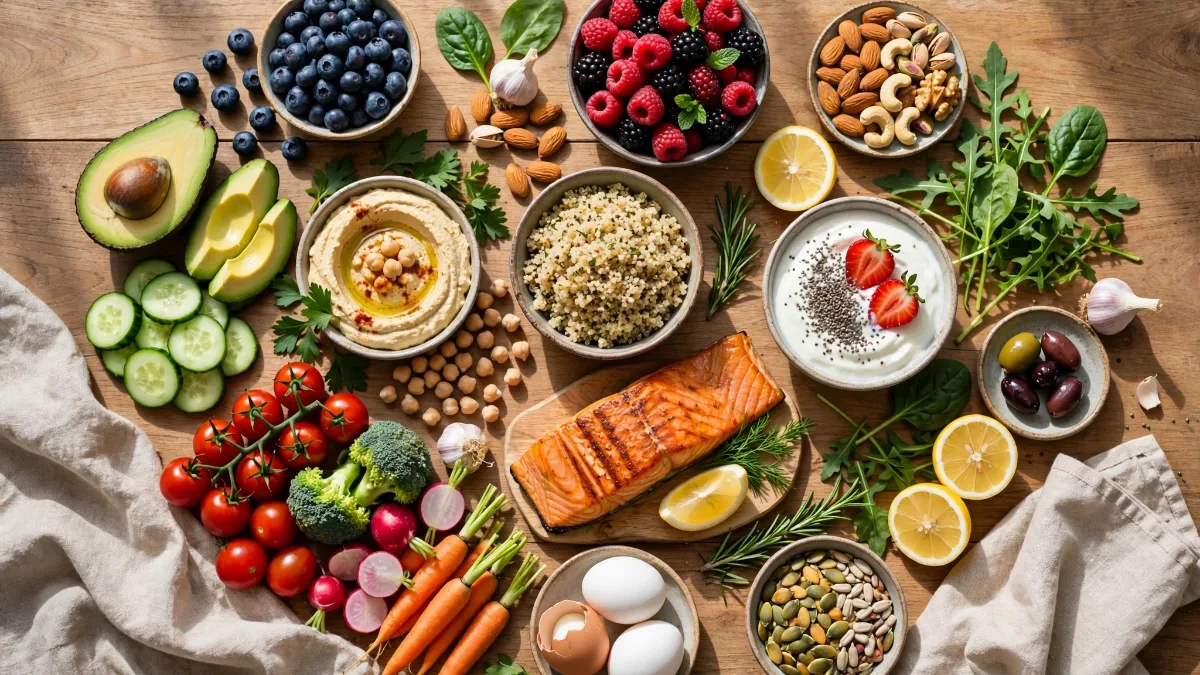
Prioritizing real food helps keep metabolism balanced.
The daily hustle, bills, work pressure... Everyone experiences stress. The problem is when it stops being occasional and becomes our 'normal'.
When we are stressed, the body releases large amounts of cortisol and adrenaline, ancestral hormones that prepared us to flee from predators. Cortisol at elevated levels for a long time signals to the organism that it needs to store energy (especially in the abdominal region) and mobilize resources in a disordered way.
Furthermore, chronic stress sabotages sleep, increases cravings for ultra-processed foods, and completely disrupts our self-care routine.
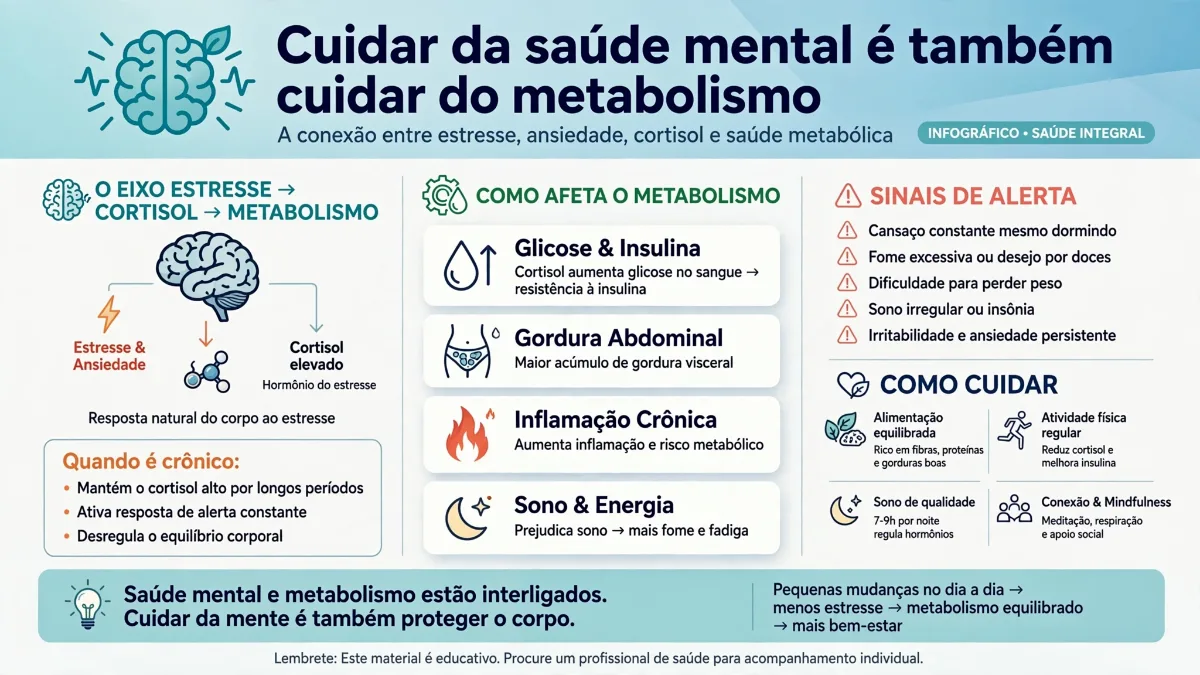
Taking care of mental health is also taking care of metabolism.
After seeing so many things that can get in the way, the good news is that your metabolism is not broken. Since it is highly adaptable, just as it slows down to protect itself, it speeds back up and works efficiently when you adjust your course.
Forget miraculous formulas, sketchy detox teas, or fad diets that promise miracles in three days. The real path involves consistency: eating real food in adequate amounts (without chronic starvation), prioritizing good sleep, drinking water, walking more, and adding some strength exercise to your week.
Always remember that every body has its own rhythm. If you suspect there is something deeper behind extreme fatigue or hard-to-explain changes, the safest and smartest move is to talk to a physician or nutritionist for a personalized evaluation.

Aviso de Saúde
O conteúdo deste artigo é puramente informativo e educacional, baseado em pesquisas publicadas. Ele não substitui o aconselhamento, diagnóstico ou tratamento médico profissional. Consulte sempre um médico ou nutricionista antes de realizar mudanças na sua dieta, treino ou suplementação.
Entusiasta de nutrição e biohacking, focado em simplificar a ciência da saúde.
Participe da discussão com a comunidade do Metaboliza