
Módulos & Calculadoras[01]
Calculadora de IMC
Calculadora de TMB & GET
Calculadora de Macronutrientes
Calculadora de Hidratação
Discover how your metabolism and daily habits work together to truly shield your body—without miraculous quick fixes.
Editor e Criador do Metaboliza
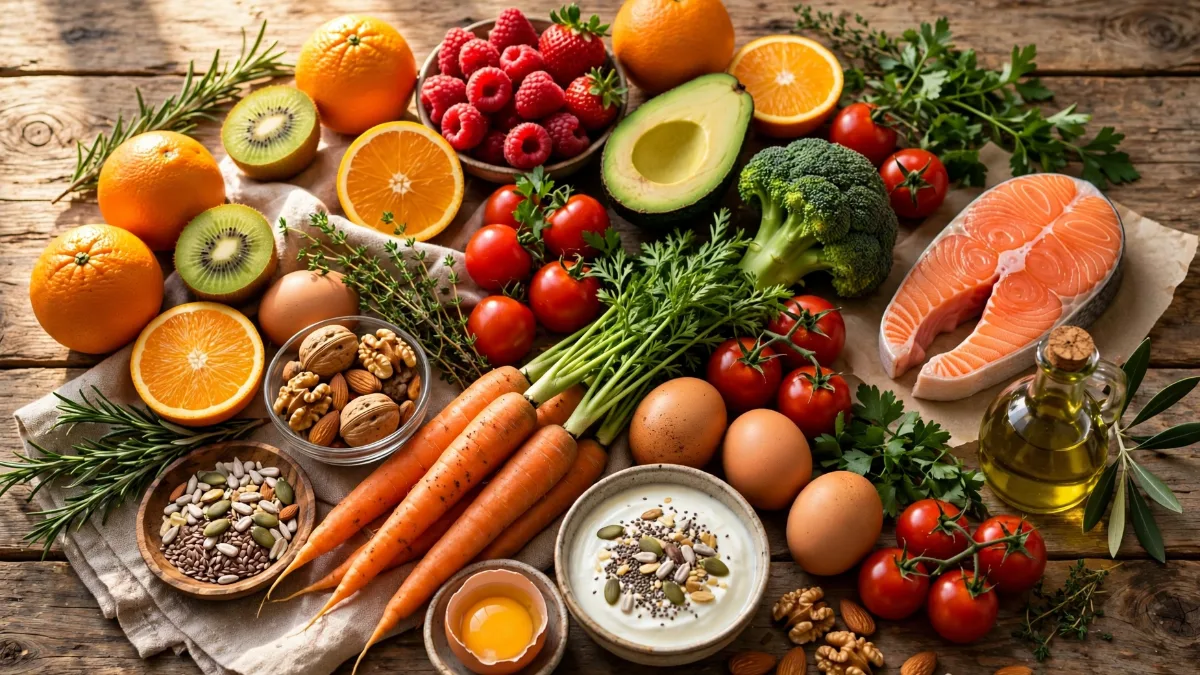
Fresh and colorful foods arranged on a rustic table, representing smart nutrition for the immune system.
Whenever we hear about health, the word 'immunity' appears like a magical shield protecting us from any harm. But the biological reality is much more fascinating and complex than that. According to data compiled by the Harvard T.H. Chan School of Public Health, the immune system is not an isolated organ, but a true orchestra composed of cells, tissues, and organs working in a network.
For this orchestra to play in perfect harmony, it depends directly on your metabolism. Think of metabolism as your body's energy and logistics plant. If the plant works well, providing micronutrients and energy in the right measure, defense cells operate with maximum efficiency. Otherwise, the system becomes sluggish, vulnerable, and deregulated.
Current science rejects the concept of 'super-immunity' achieved through a single miraculous product. The secret lies in maintaining balance. The human body needs a constant supply of essential micronutrients—such as vitamins A, C, D, E, plus zinc, selenium, and iron—to ensure the immune response is quick when necessary, but without excesses that cause chronic inflammation.
The human body is a feedback machine, but often we simply ignore the warning lights on the dashboard. When we wonder about low immunity symptoms and causes, we usually expect to see only frequent colds. However, a drop in the body's defenses manifests in various ways on a daily basis.
Among the most common signs are excessive and persistent fatigue (which doesn't go away even after a full night's sleep), recurrent infections—such as frequent cold sores, unexplained sore throats, or flus that take weeks to clear up—as well as constant digestive issues and very slow wound healing.
It is essential to point out that these symptoms do not serve as a definitive diagnosis of serious illnesses, but rather function as a cry for help from your lifestyle. Chronic stress, poor nights of sleep, and restrictive, nutrient-poor diets are the primary causes that put the immune system into energy-saving mode.
When it comes to what is good for boosting immunity, modern nutrition's answer is clear: real food. As dietary guidelines recommend, the foundation for keeping the body strong lies in consuming fresh and minimally processed foods, leaving behind ultra-processed items full of chemical additives.
The immune system needs specific raw materials to build and activate its defense cells. Vitamins for low immunity are often sought after in pharmacies, but the best absorption pathway always starts on the plate. Foods rich in vitamin C (such as acerola, oranges, lemons, and guava) help with antioxidant function and cellular support. Meanwhile, zinc, found in pumpkin seeds, nuts, and lean meats, is crucial for the normal development of innate defense cells, as studies published in the American Journal of Clinical Nutrition point out.
Additionally, adequate levels of vitamin D—whose deficiency below 20 ng/mL is considered critical—directly modulate the immune response. Although the main source is moderate sun exposure, fatty fish like sardines and salmon also help in the diet.
Did you know that most of your defense system is not in your blood, but in your digestive tract? About 70% to 80% of the human body's immune cells reside in the gastrointestinal tract. This is why taking care of the gut microbiota is the real secret to understanding how to improve the immune system quickly.
The gut acts as a strict bouncer: it needs to absorb the nutrients that nourish us, but it must block the entry of harmful toxins and pathogens. When our gut flora is out of balance—due to diets rich in refined sugar and poor in fiber—this bouncer gets tired and opens the door to systemic inflammation.
To keep your gut happy and strong, bet on prebiotic foods (such as garlic, onions, green bananas, and oats), which feed the good bacteria, and probiotics (present in natural and fermented yogurts), which help repopulate the microbiota with powerful allies for your health.
It is no use eating all the fruits in the produce section if your lifestyle is sabotaging your body behind the scenes. Chronic stress, for example, releases high doses of cortisol. In the short term, cortisol is a great emergency alarm, but when it remains elevated for too long, it paralyzes and suppresses the action of defense cells.
Another critical factor is sleep. Scientific data show that sleeping less than 6 hours a night quadruples the risk of catching common colds after viral exposure. During deep sleep, the body produces proteins called cytokines, which are essential for fighting infections and inflammation.
Finally, regular moderate physical activity acts as a metabolic booster, improving the circulation of immune cells throughout the body. The secret is consistency, not excess that leads to extreme physical wear and tear.
One of the biggest modern traps is resorting to self-medication with mega-doses of vitamins at the first sign of a sneeze. Science reinforces that an excess of certain vitamins (such as fat-soluble vitamins A and E) can cause liver toxicity, while the indiscriminate use of supplements without medical prescription brings no real benefits to healthy, well-nourished individuals.
Zinc lozenges, when started at the very first symptoms of a cold at appropriate dosages (above 75mg/day guided by professionals), can reduce symptom duration by about 33%, but they should not be used indiscriminately.
If you suffer from constant infections, unexplained fevers, or fatigue that does not go away, it is time to see a doctor or nutritionist. Only detailed blood tests can identify real deficiencies and establish a safe, personalized plan for your body.
Aviso de Saúde
O conteúdo deste artigo é puramente informativo e educacional, baseado em pesquisas publicadas. Ele não substitui o aconselhamento, diagnóstico ou tratamento médico profissional. Consulte sempre um médico ou nutricionista antes de realizar mudanças na sua dieta, treino ou suplementação.
Criador do Metaboliza, focado em simplificar a ciência da nutrição, metabolismo e biohacking para uma vida de alta performance.
Participe da discussão com a comunidade do Metaboliza