

Módulos & Calculadoras[01]
Calculadora de IMC
Calculadora de TMB & GET
Calculadora de Macronutrientes
Calculadora de Hidratação
Discover how this age-old lifestyle protects the heart, optimizes health, and fits perfectly into your daily routine.
Editor e Criador do Metaboliza
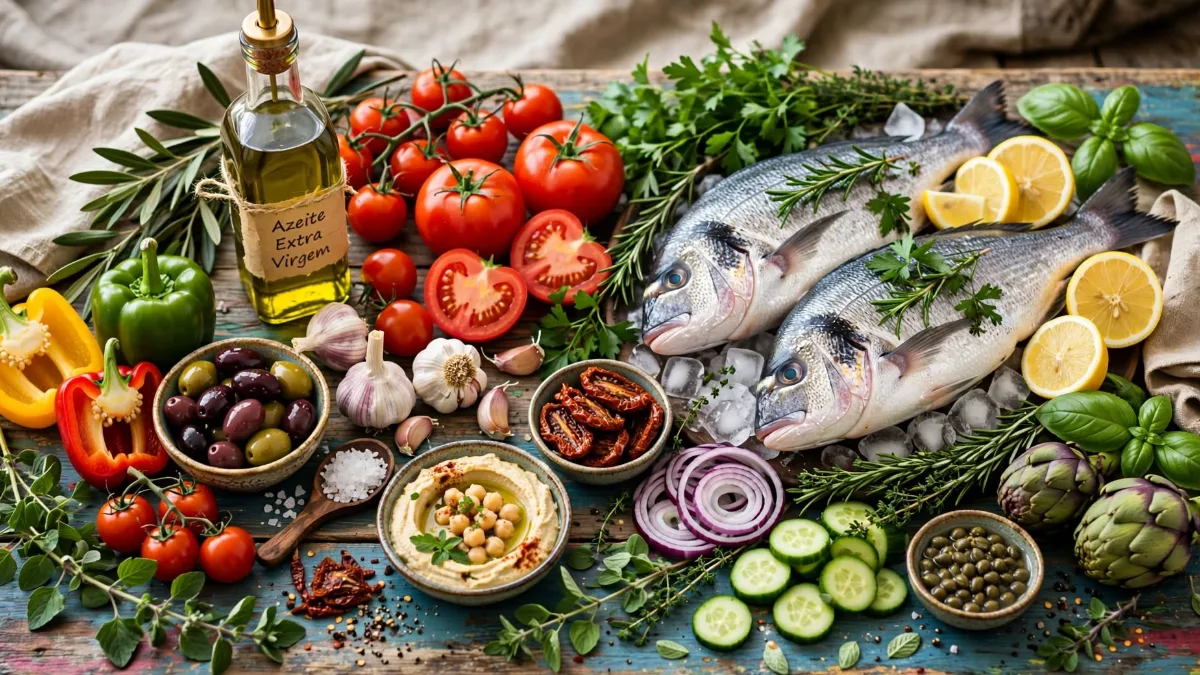
Colorful table with fresh Mediterranean diet ingredients such as olive oil, tomatoes, and fish.
The Mediterranean diet is not just another passing fad promising miracles in a few weeks. In fact, it reflects the traditional eating pattern of countries bathed by the Mediterranean Sea, such as Greece and Italy, which caught the attention of medical science back in the 1950s through the pioneering studies of Ancel Keys. Recognized by UNESCO as intangible cultural heritage, this approach has achieved the status of the gold standard in preventive medicine.
In essence, this lifestyle relies on the synergy of nutrients. By prioritizing whole and minimally processed foods, the body receives a flood of bioactive compounds that combat chronic low-grade inflammatory processes. It is not about obsessively counting calories, but rather changing the quality of what goes on the plate, respecting seasonality, and valuing the act of eating mindfully, with a strong emphasis on social connection.
High-impact clinical trials and meta-analyses published in PubMed and reviewed by major health institutions show that this dietary pattern optimizes insulin sensitivity, improves the lipid profile, and protects the circulatory system. It is a true long-term strategy to shield the metabolism and promote longevity with quality.
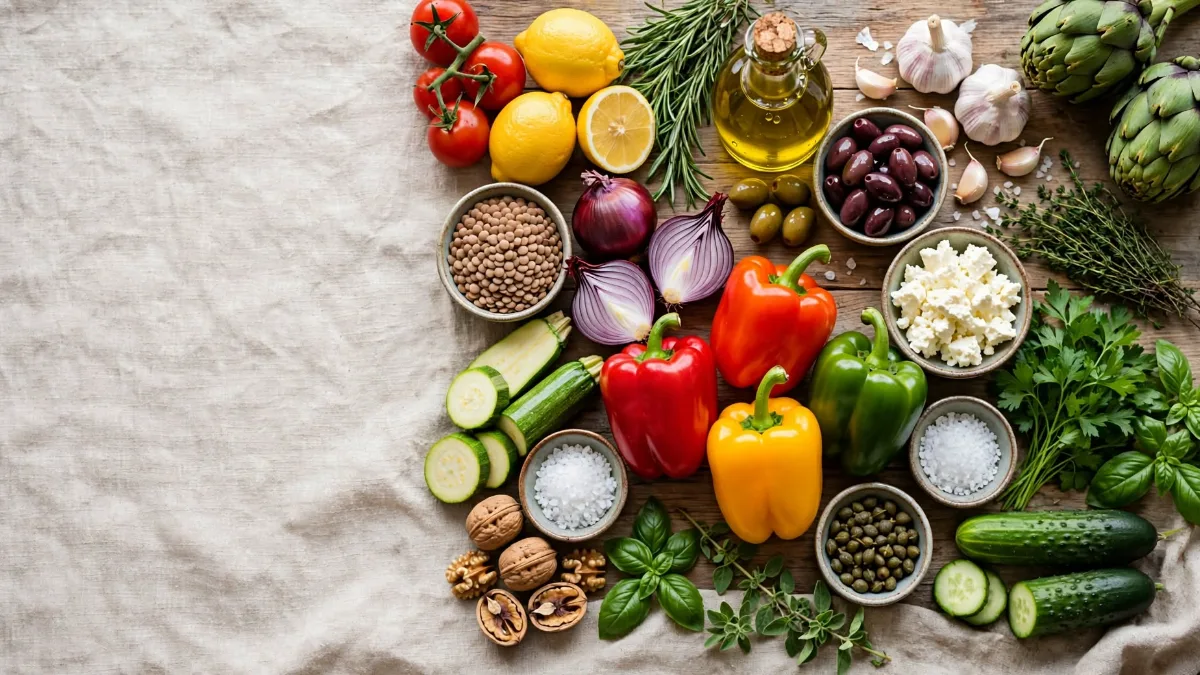
Fresh and colorful ingredients that form the basis of the traditional Mediterranean diet.
When we talk about what you can eat on the Mediterranean diet, the answer is simple: real food. The main protagonist of this dietary pattern is extra virgin olive oil, used generously as the primary fat source for seasoning and cooking, providing monounsaturated fatty acids and powerful antioxidants.
The base of the plate is built with a huge variety of plant-based foods. Fresh vegetables, legumes, and fruits appear in every meal, providing essential fiber, vitamins, and minerals. Right alongside them are whole grains (such as oats, barley, and whole wheat) and legumes (beans, chickpeas, lentils), which form the energetic and satiating foundation of daily life.
Nuts (walnuts, almonds, chestnuts) and seeds are also welcome for mid-meal snacks. In addition, the consumption of fish and seafood is highly encouraged, especially those rich in omega-3, such as sardines and tuna, consumed several times a week. Dairy enters primarily in the form of natural yogurts and fermented cheeses, always in moderation.
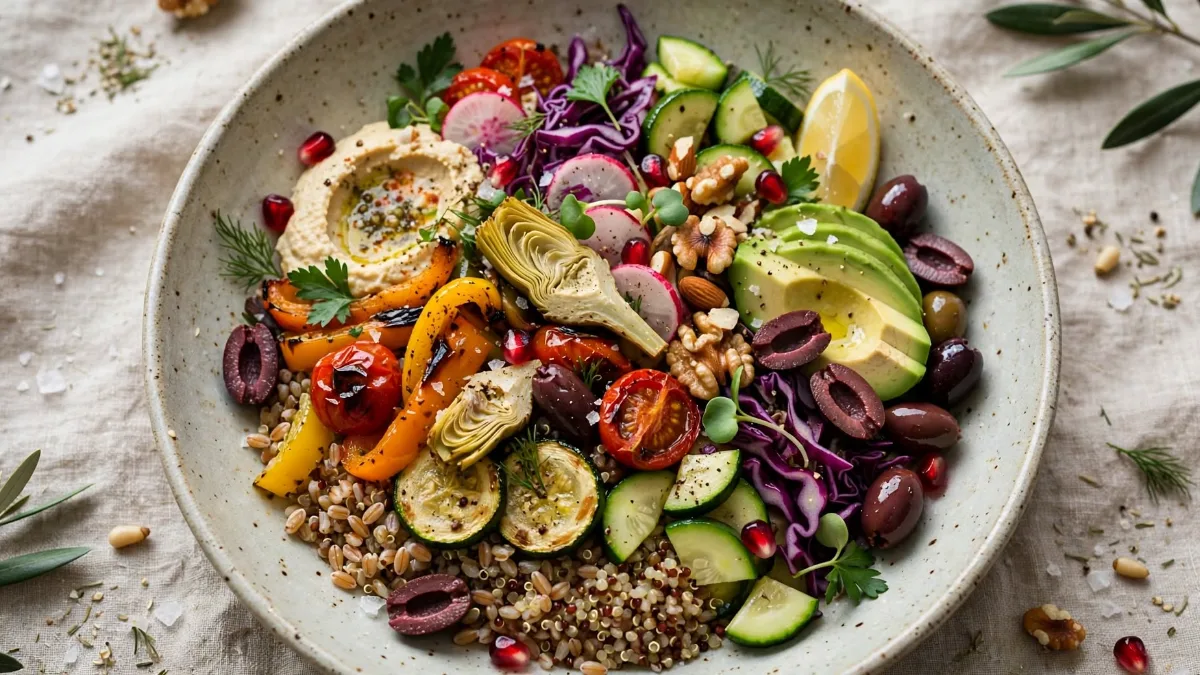
A plate rich in colorful vegetables, whole grains, and healthy fats.
Science never tires of praising this lifestyle, and the numbers speak for themselves. Robust data compiled by major research centers show that adults who closely follow the Mediterranean diet experience an impressive 39% reduction in the incidence of cardiovascular disease and a 33% reduction in the risk of stroke.
From a purely metabolic standpoint, the dietary pattern demonstrates a very strong inverse association with dyslipidemia and abdominal obesity. In controlled clinical analyses, a significant drop is observed in crucial systemic inflammatory biomarkers, such as high-sensitivity C-reactive protein (hs-CRP) and inflammatory interleukins, which tend to be elevated in metabolic syndrome.
It is worth noting that while many people seek out the Mediterranean diet to lose weight, its true superpower lies in preserving vascular health and glycemic control. By stabilizing blood sugar levels, it becomes a formidable ally in the prevention and auxiliary management of type 2 diabetes, without requiring restrictive diets that are impossible to maintain long-term.
Conceptual representation of metabolic health and cardiovascular well-being.
To understand the Mediterranean diet, you need to look at both what goes into and what stays out of the shopping cart. The secret to metabolic success lies in drastically limiting anything highly processed, industrialized, and refined.
Red meats, for example, should make room for fish and poultry, appearing on the menu only sporadically and in small portions. Foods rich in added sugars, sodas, concentrated sweets, and refined flours (such as white breads and regular pasta made with refined wheat) are practically left behind.
A point that always raises questions is the consumption of red wine, historically associated with Mediterranean culture. It is important to emphasize that alcohol is never mandatory. If consumed, it should be done in strict moderation (an occasional glass during meals), and people with specific medical restrictions should avoid it entirely. The absolute priority for hydration should always be water and unsweetened tea.
Ultra-processed foods and refined sugars that should be avoided in daily life.
Putting together a Mediterranean diet menu to improve health and wellness does not require expensive or hard-to-find ingredients. The idea is to create combinations rich in colors, textures, and nutrients that bring real satiety throughout the day.
For breakfast, opt for scrambled eggs with a drizzle of olive oil accompanied by a slice of whole-grain sourdough bread and a fresh fruit, or natural yogurt with oats and nuts. For lunch and dinner, the classic format works perfectly: half the plate filled with raw salad and steamed vegetables, one quarter with whole grains or legumes, and one quarter with lean proteins (grilled chicken, sardines, or fresh fish).
For afternoon snacks, a handful of nuts or a fruit with a touch of cinnamon resolves hunger without a blood sugar spike. Variety is the secret to avoiding boredom and turning the meal plan into a definitive lifestyle.
One of the greatest advantages of this dietary style is that you do not need to spend a fortune buying imported products from Europe to follow it. Local and seasonal biodiversity is perfect for personalizing the Mediterranean diet without losing any of its nutritional properties.
Extra virgin olive oil remains indispensable, but vegetables can be your local favorites: squash, leafy greens, tomatoes, and carrots provide a show of nutrients. As for grains and legumes, your favorite beans combined with brown rice or root vegetables can masterfully substitute Mediterranean grains.
European nuts can easily be swapped for local alternatives that are rich powerhouses of antioxidants and good fats. And when it comes to fish, fresh local options offer excellent cost-effectiveness and high protein content, proving that eating well is universally accessible.
:background_color(white)/hotmart/product_pictures/199a3aa5-89b6-49e9-ad7a-ef99c3d4e17f/Designsemnome.jpg?w=920)
Embarque em uma jornada de emagrecimento saudável com nosso eBook repleto de 50 receitas projetadas especificamente para ajudar você a secar enquanto segue uma Dieta Cetogênica. Das refeições do dia a dia a petiscos e sobremesas, cada receita é elaborada para manter você saciado, queimar gordura e alcançar seus objetivos de perda de peso. Com orientações detalhadas e dicas valiosas, este eBook é o seu companheiro essencial na busca por um corpo mais magro e saudável.
Aviso de Saúde
O conteúdo deste artigo é puramente informativo e educacional, baseado em pesquisas publicadas. Ele não substitui o aconselhamento, diagnóstico ou tratamento médico profissional. Consulte sempre um médico ou nutricionista antes de realizar mudanças na sua dieta, treino ou suplementação.
Criador do Metaboliza, focado em simplificar a ciência da nutrição, metabolismo e biohacking para uma vida de alta performance.
Participe da discussão com a comunidade do Metaboliza