
Módulos & Calculadoras[01]
Calculadora de IMC
Calculadora de TMB & GET
Calculadora de Macronutrientes
Calculadora de Hidratação
Discover what this good fat is for, where to find it, and how to seamlessly include it in your daily routine.
Criador do Metaboliza & Autor
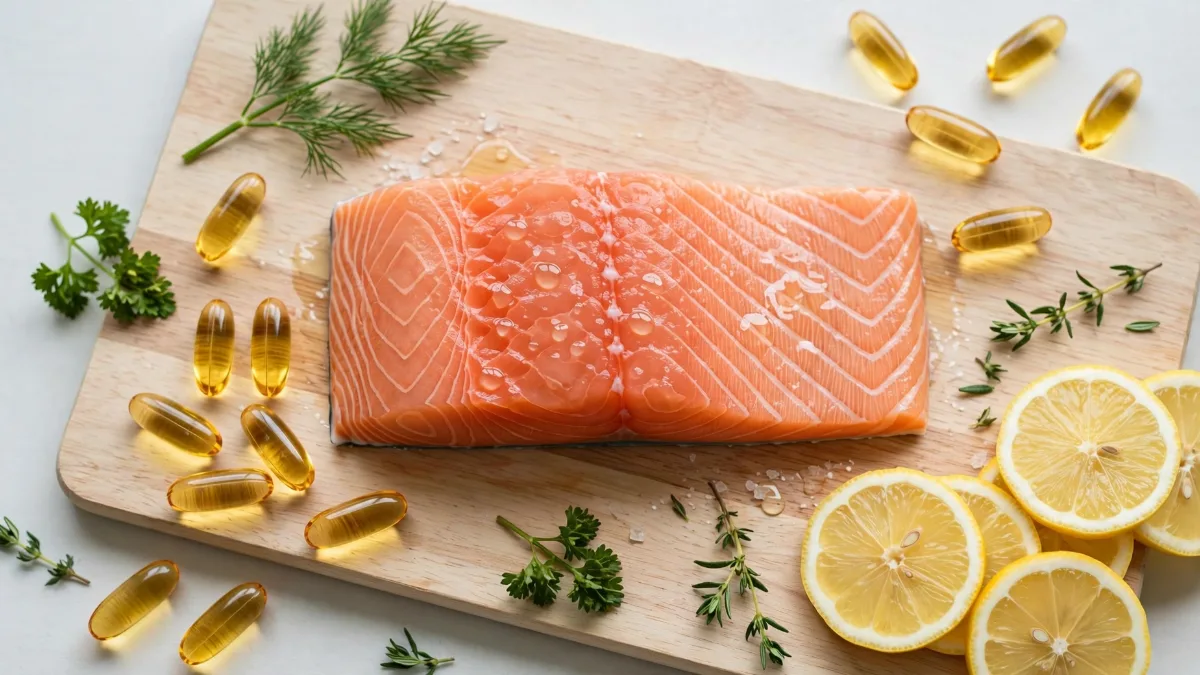
Fish oil capsules and fresh salmon on a wooden cutting board.
You know those fats we usually demonize? Forget about that for a moment. Omega-3 belongs to a very special group: essential polyunsaturated fatty acids. The word 'essential' carries immense weight here because our bodies simply cannot manufacture this marvel on their own. If we don't consume it through food or supplementation, our bodies will feel the absence.
According to analyses published by the Harvard T.H. Chan School of Public Health, these fats act as true building blocks for cell membranes throughout the body. They directly influence how our cells function, providing flexibility and ensuring proper communication between them. That's why, when we talk about long-term health, omega-3 is always at the top of experts' lists.
Beyond its role in cellular structure, omega-3 is widely studied for its ability to modulate inflammatory processes in the body. Although inflammation is a natural defense response, when it becomes chronic, it paves the way for various health issues. This is where the standout role of this beneficial fat comes into play.

Conceptual illustration of healthy fat molecules in an aqueous medium.
When you look at a supplement label or research the topic, it's common to encounter three mysterious acronyms: ALA, EPA, and DHA. Knowing how to differentiate them completely changes how you view your nutrition. They are not all the same, and each plays a specific role in our bodies.
ALA (alpha-linolenic acid) is the representative of the plant world. We easily find it in flaxseeds, chia seeds, and walnuts. The key detail highlighted by the National Institutes of Health (NIH) is that our bodies must convert ALA into EPA and DHA to reap its most potent benefits. The problem? This human conversion rate is extremely low, often falling below 1% to 5%. In other words, the plant kingdom is great, but it has metabolic limitations.
On the other hand, EPA (eicosapentaenoic acid) and DHA (docosahexaenoic acid) are the active forms that our bodies love. EPA strongly supports circulation, cardiovascular health, and the control of inflammatory processes. DHA, meanwhile, is the darling of the brain and eyes—after all, a huge slice of our brain tissue is composed precisely of it. Both are found in abundance in cold, deep-water fish such as salmon, sardines, and tuna.
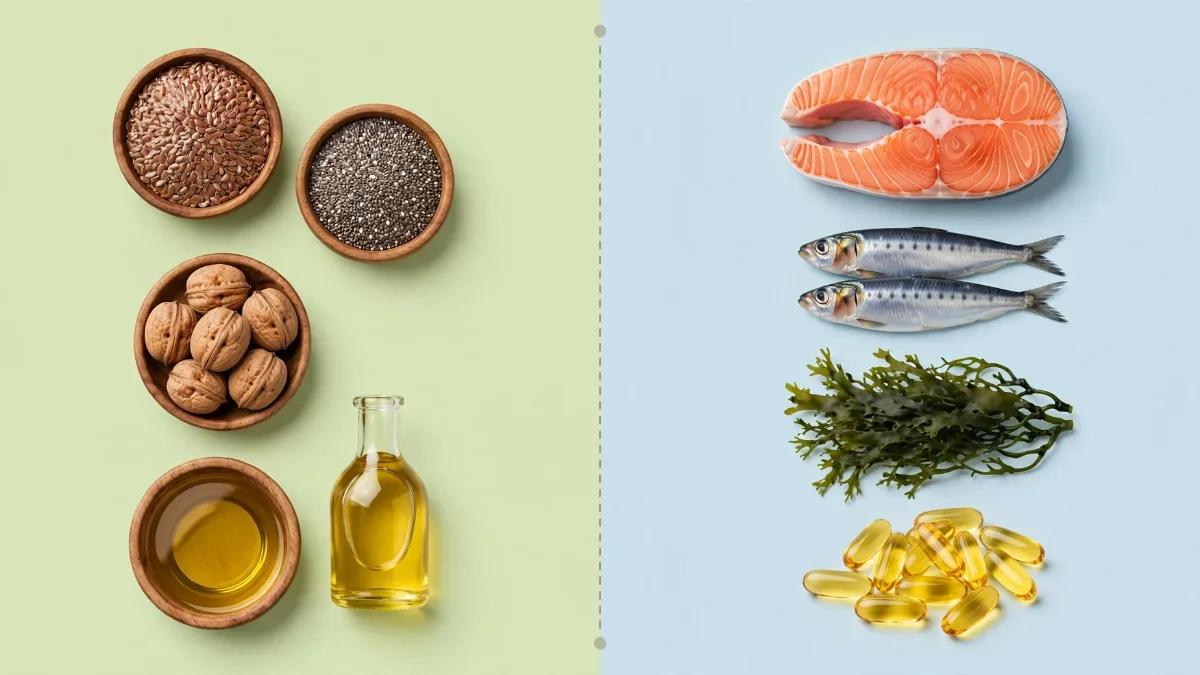
Visual scheme comparing plant and marine sources of omega-3.
We've reached the golden question: what is omega-3 used for in practice? The list of advantages is vast and backed by major medical guidelines. The most classic and science-backed benefit is cardiovascular protection. Omega-3 helps maintain regular heart rhythms, improves blood vessel elasticity, and is a powerful ally in lowering triglycerides.
Clinical data shows that using therapeutic doses (generally between 2g to 4g daily of EPA/DHA under medical supervision) can drop triglyceride levels by an impressive 25% to 30%. It is quite a tool for anyone who needs to optimize their bloodwork.
And what about metabolism—does omega-3 make you gain weight? Many people fear consuming fat and ending up gaining weight. The good news is that omega-3 does not cause direct weight gain or magically accelerate basal metabolism. On the contrary, by helping improve insulin sensitivity and reducing inflammation associated with adipose tissue, it supports a healthier, more functional metabolism within a balanced routine. Furthermore, your brain will thank you: DHA boosts concentration, memory, and protects cognitive functions as the years go by.

Person practicing outdoor physical activity focused on well-being.
So, what is the best time to take omega-3? Since it is a fat-soluble nutrient (or rather, a fat), the golden rule is: consume it alongside a meal that contains other fats or solid foods. Taking it on an absolute empty stomach or with plain water is a waste, as absorption plummets. Lunch or dinner are usually the perfect times.
Regarding dosage, international health organizations recommend a daily intake of at least 250 mg to 500 mg of combined EPA and DHA for healthy adults. However, if the goal is therapeutic—such as lowering high triglycerides—doses change drastically and must be defined by a physician or nutritionist.
Another point that bothers some people is the famous 'fishy aftertaste.' To avoid this, the classic tip is to keep the capsules in the freezer (yes, they don't freeze solid, but the cold reduces odor release) or choose enteric-coated or lemon- and vanilla-flavored versions.

Omega-3 supplement bottle next to a healthy lunch plate.
The scientific consensus is unanimous: real food must be priority number one. Cold, deep-water fish—such as wild salmon, sardines, herring, mackerel, and tuna—are true powerhouses of EPA and DHA. The general recommendation from cardiologists and nutritionists is to consume portions of fatty fish at least twice a week.
However, we know that everyday realities don't always make frequent consumption of fresh, high-quality fish easy. This is where smart supplementation with fish oil, krill oil, or even vegan options derived from microalgae (rich in DHA and EPA straight from the fish's original source) comes into play.
Supplementation does not replace a poor diet, but it fills important gaps when dietary intake is insufficient. The secret lies in aligning your dietary routine with the guidance of a professional who understands your actual needs.

Plate containing grilled fish fillet and assorted seeds.
Buying the first cheap bottle you see at the pharmacy can be a trap. The supplement market is vast, and quality varies wildly among brands. To avoid getting fooled, you need to pay attention to a few fundamental details on the label.
The first step is to check the actual concentration of EPA and DHA per serving. Many brands put '1000 mg of fish oil' in bold letters on the front, but when you turn the bottle around, the sum of EPA and DHA doesn't exceed 300 mg. The rest is just regular saturated or monounsaturated fat. Look for concentrated products.
The second critical point is purity. Because the oceans contain mercury and other heavy metals, fish oil must undergo a rigorous purification process called molecular distillation. Look for quality seals and third-party international certifications (such as IFOS - International Fish Oil Standards), which certify that the product is free of contaminants and does not oxidize easily.

Hands carefully analyzing the label of a supplement bottle.
Despite being a spectacular nutrient, omega-3 requires caution in certain scenarios. The primary attention goes to individuals taking anticoagulant or antiplatelet medications. Because omega-3 has properties that mildly thin the blood, combined high-dose use may increase the risk of bleeding or bruising.
Those with scheduled surgeries are also typically advised by physicians to discontinue supplement use days before the procedure. Pregnant women, nursing mothers, and individuals with clotting disorders should always consult their doctor or nutritionist before opening any bottle.
As for the most common side effects—generally associated with low-quality products or excessive doses—they include mild gastric discomfort, fish-flavored reflux, and transient nausea. Respecting professional guidelines is the key to enjoying all the benefits with complete safety.
Aviso de Saúde
O conteúdo deste artigo é puramente informativo e educacional, baseado em pesquisas publicadas. Ele não substitui o aconselhamento, diagnóstico ou tratamento médico profissional. Consulte sempre um médico ou nutricionista antes de realizar mudanças na sua dieta, treino ou suplementação.
Entusiasta de nutrição e biohacking, focado em simplificar a ciência da saúde.
Participe da discussão com a comunidade do Metaboliza