

Módulos & Calculadoras[01]
Calculadora de IMC
Calculadora de TMB & GET
Calculadora de Macronutrientes
Calculadora de Hidratação
Discover the real differences between gym iron and bodyweight training and find out which one best fits your routine.
Editor e Criador do Metaboliza
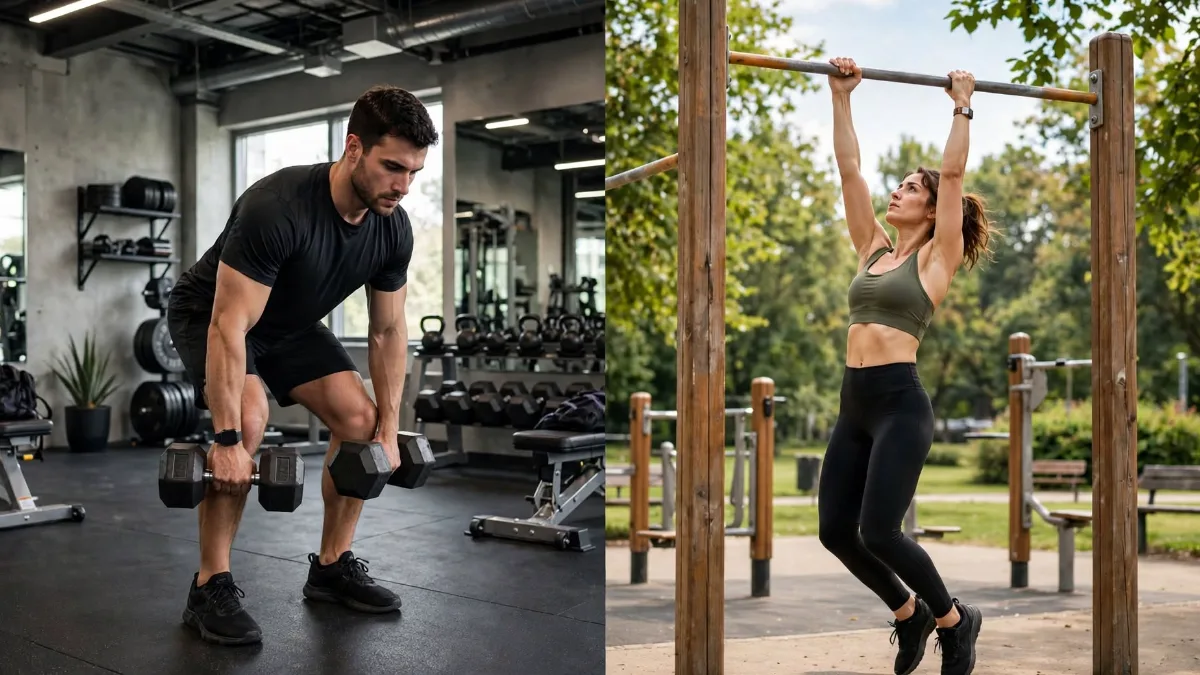
Comparison between free weight training and outdoor calisthenics.
Cast the first weight plate if you have never been torn between paying a gym membership or starting to work out at the neighborhood park. The fitness universe loves to create rivalries, and the clash between traditional weight training and calisthenics is one of the most classic. On one side, we have dumbbells, barbells, cables, and machines full of adjustments. On the other, we have the pure force of gravity and the weight of your own body.
The scientific truth behind this debate is liberating: your muscle tissue doesn't know how to read the equipment label. To the muscle, what matters is mechanical stress and metabolic tension. In other words, it responds to the required effort, whether you're pushing a ton of iron or lifting your own torso against gravity. But, of course, each modality has its own approach, practical advantages, and a practitioner profile that fits best.
In this article, we will take a deep dive into the difference between weight training and calisthenics, evaluating what science says about muscle gain, calorie burn, safety for beginners, and how you can decide which one makes the most sense for your lifestyle.
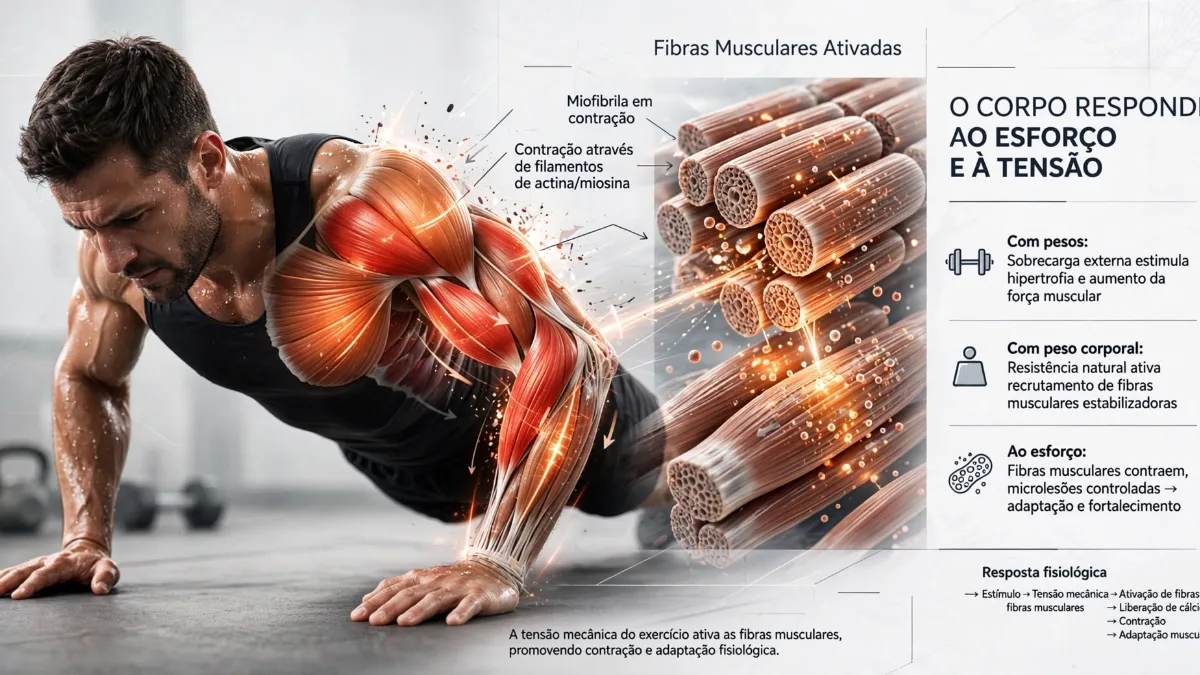
The body responds to effort and tension, whether with weights or bodyweight.
Weight training is the tried-and-true choice for anyone looking to transform their body. By using free weights, pulleys, and guided machines, it allows you to isolate specific muscle groups with surgical precision. Want to focus solely on the front of your thigh? There's a machine for that. Want to work your lats without exhausting your forearms? The lat pulldown machine is waiting for you.
From a metabolic perspective, the impact is impressive. Data compiled by institutions like the Harvard T.H. Chan School of Public Health and the American College of Sports Medicine show that regular strength training—done at least twice a week—is associated with a significant reduction in all-cause mortality risk. Furthermore, analyses show an average increase of about 7% in basal metabolic rate after 10 weeks of consistent strength training, meaning your body continues burning more energy even at rest.
Another strong point of weight training is the ease of load progression. If you can lift 22 pounds (10 kg) today and want to progress next week, you simply add a 2.2-pound (1 kg) plate. This linearity makes tracking gains very practical, especially for those transitioning from a sedentary lifestyle or needing post-injury rehabilitation.
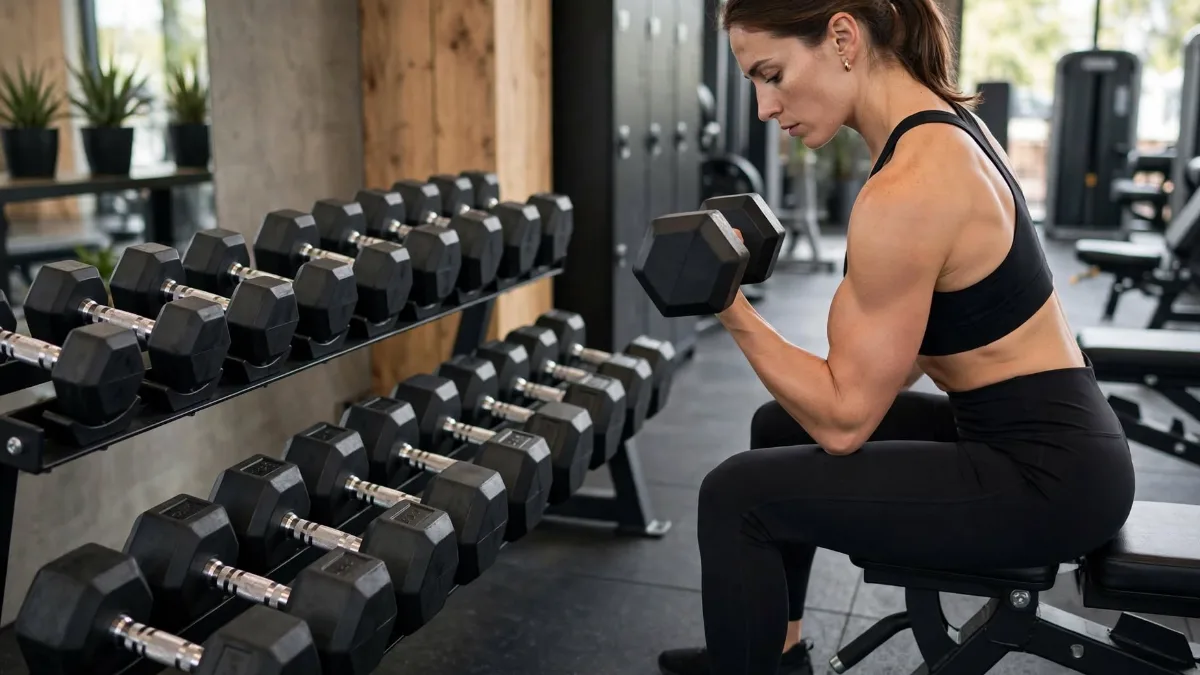
Weight training stands out for its precision in isolation and ease of load progression.
Calisthenics comes from the Greek words 'kalos' (beauty) and 'sthenos' (strength). It is the art of using one's own body weight to develop strength, flexibility, agility, and balance, often requiring nothing more than the floor and a good pull-up bar. Think of push-ups, pull-ups, bodyweight squats, crunches, and advanced acrobatic movements like the human flag and muscle-up.
Unlike weight training, which easily isolates muscles, calisthenics almost always focuses on compound movements—those that recruit multiple joints and dozens of muscles at the same time. When you do a push-up, for example, you aren't just working your chest; your core, glutes, shoulders, and triceps must work in synergy to keep your body aligned.
Research published on platforms like PubMed and PMC (National Institutes of Health) regarding calisthenic training interventions shows expressive improvements in posture, relative strength (the ability to move one's own body), and body composition in healthy individuals. It is the ultimate workout for anyone wanting functionality and absolute mastery over their own movements.
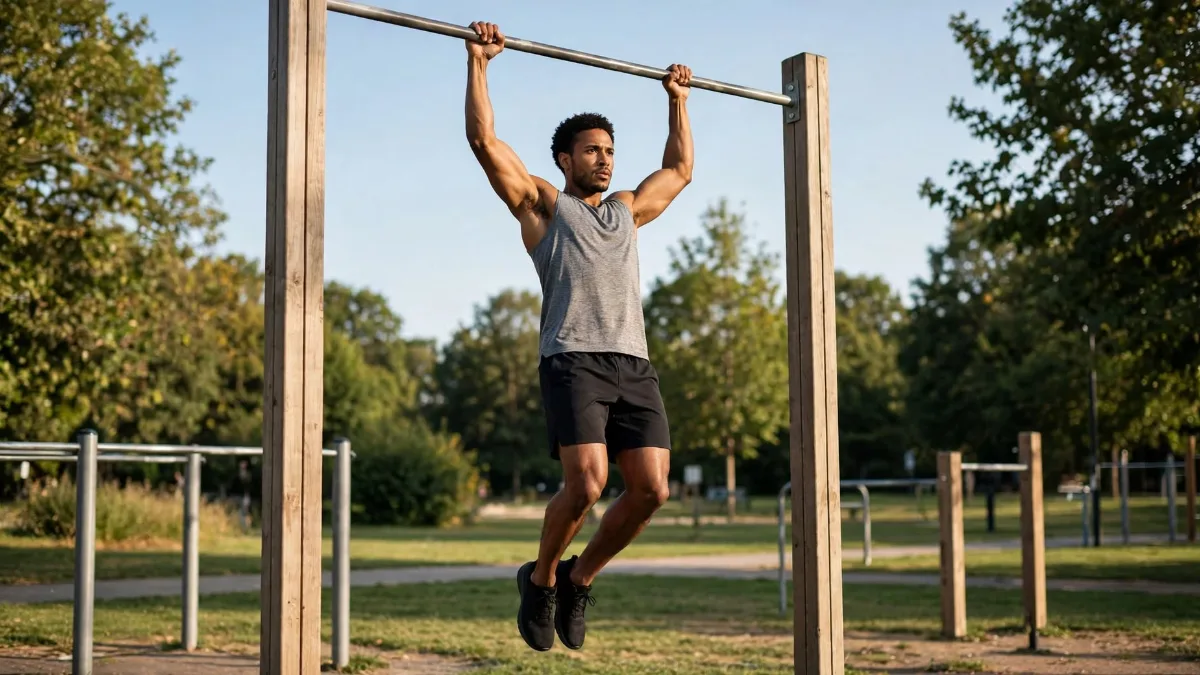
Calisthenics works the body as an integrated unit using gravity as resistance.
The million-dollar question: which modality is best for building muscle mass? The short and direct answer, backed by current scientific consensus, is: both work incredibly well, provided the fundamental principles of hypertrophy are applied (adequate volume, intensity, and proximity to muscle failure).
A study published in the Journal of Strength and Conditioning Research evaluated the effects of progressive push-up training (high-intensity calisthenics) compared to traditional strength training (such as free-weight bench press). The results showed that when effort was equivalent and practitioners trained close to muscle failure, strength and muscle thickness gains were statistically similar between the two groups.
The major practical difference lies in how you adjust difficulty. In weight training, you add weight plates. In calisthenics, you alter the leverage and biomechanics of the exercise—for example, turning a standard push-up into a decline push-up with elevated feet, or moving from a regular pull-up to a close-grip or archer pull-up. Weight training still holds an advantage for those seeking hypertrophy in smaller or specific muscles (like biceps and calves) due to the ease of isolation, but saying you can't get strong with calisthenics alone is an outdated myth.

Muscle growth depends on proper stimulus, whether with weight plates or bodyweight.
When it comes to burning fat and losing weight, many people run straight to the treadmill. However, resistance training—whether with weights or calisthenics—is a much smarter tool to boost your metabolism long-term because it builds and preserves lean mass.
Does calisthenics burn more fat than weight training? In practice, the calorie burn of a session depends much more on intensity, pace (such as doing dynamic circuits with short rest periods), and your body weight than the modality itself. A dynamic calisthenics session mixing plyometrics and bodyweight movements at high speed can elevate heart rate overwhelmingly, functioning almost like aerobic training combined with strength.
On the other hand, weight training allows for surgical control over volume and load, ensuring you burn energy without compromising your joints if you are significantly overweight. In both cases, the true metabolic bonus comes from the EPOC effect (excess post-exercise oxygen consumption): your body continues to burn energy hours after the workout to recover from the effort.

Intense resistance workouts help elevate energy expenditure even after the session ends.
This is where calisthenics shines brightly. If your budget is tight or you travel often for work, packing a gym in your suitcase is impossible, but packing your body is guaranteed. You can work out in a hotel room, your living room, or a public park at sunrise. There are no operating hours excuses or heavy membership fees.
Conversely, weight training offers a controlled environment with climate control, a wide variety of equipment, and on-duty trainers to assist with immediate postural correction. For those who prefer a gym structure—where you simply walk in, follow your routine, and leave without needing to set up barbells or look for a sturdy tree branch—the membership cost is worth every penny for the convenience.
Evaluate your routine honestly: do you have the discipline to work out at home, or do you need the commitment of leaving and going to a specific location? The best modality is always the one you can maintain consistently over months and years.

Calisthenics offers total geographical freedom, allowing you to train anywhere.
Who says you have to choose only one side of the force? Hybrid training—combining weight training and calisthenics in the same routine—has gained increasing traction among athletes and fitness enthusiasts.
Imagine starting your upper body workout with heavy compound exercises at the gym (like the barbell bench press) and supplementing with advanced push-up or pull-up variations in calisthenics. Or using leg days at the gym to guarantee heavy loads on squats and leg presses, while using calisthenics to work on your core and mobility on free days.
This approach brings the best of both worlds: you leverage the easy load progression of weight training for lower body exercises, for instance, while gaining all the body awareness, agility, and relative strength that calisthenics provides.
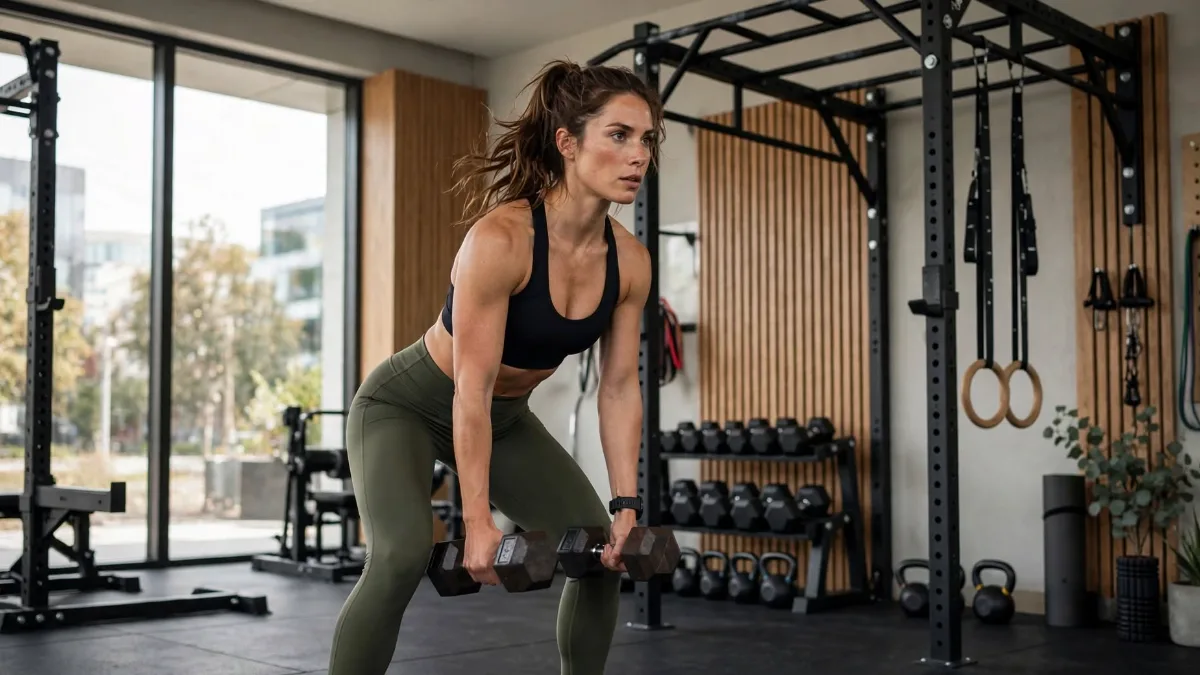
Hybrid training combines the best of both worlds for even more complete results.

Aviso de Saúde
O conteúdo deste artigo é puramente informativo e educacional, baseado em pesquisas publicadas. Ele não substitui o aconselhamento, diagnóstico ou tratamento médico profissional. Consulte sempre um médico ou nutricionista antes de realizar mudanças na sua dieta, treino ou suplementação.
Criador do Metaboliza, focado em simplificar a ciência da nutrição, metabolismo e biohacking para uma vida de alta performance.
Participe da discussão com a comunidade do Metaboliza