
Módulos & Calculadoras[01]
Calculadora de IMC
Calculadora de TMB & GET
Calculadora de Macronutrientes
Calculadora de Hidratação
In the battle of protein supplements, who comes out on top? Let's put the famous whey powder and classic egg white side by side, no fluff.
Criador do Metaboliza & Autor
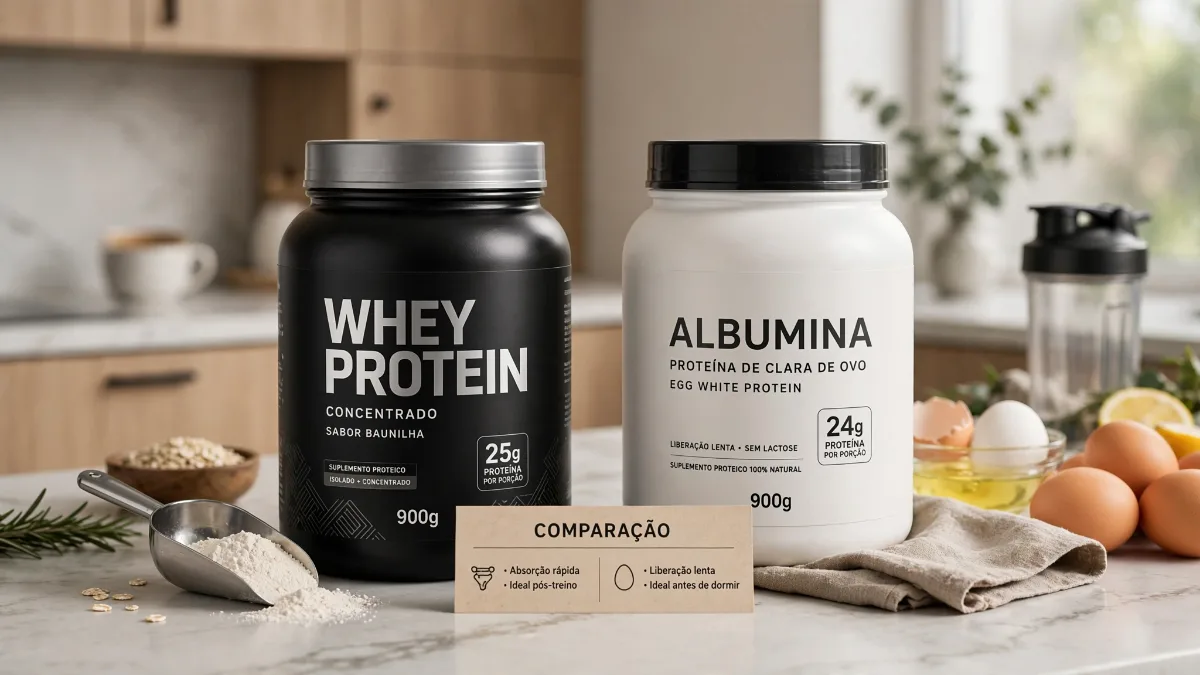
Containers of whey protein and albumin arranged on a modern kitchen counter, illuminated by natural light.
If you've ever stepped foot in a gym or talked to someone focused on hypertrophy, you've definitely heard of these two acronyms: whey protein and albumin. After all, who hasn't stared at a supplement store shelf trying to decide whether to invest their paycheck in the famous whey powder or go with the more economical dehydrated egg white option?
The truth is, choosing between whey protein or albumin usually raises many questions. After all, which is better for your wallet and your workout? The fitness market loves creating rivalries, but nutrition is not magic. Both supplements are excellent protein sources, but they work in completely different ways within our metabolism.
First and foremost, an important reminder: no supplement works miracles on its own. Supplementing with protein without lifting heavy and adjusting your diet is just an expensive way to run blood tests. Additionally, individuals with pre-existing kidney conditions or severe dietary restrictions should always consult a doctor or nutritionist before filling up their shaker bottle.

Person in the kitchen preparing a protein shake on an illuminated counter.
Whey protein is simply the protein found in whey, the liquid that separates from cheese during manufacturing. Processed and filtered, it turns into a powder that has become the darling of the fitness world. According to academic data compiled by UNIFESP in supplementation guides, whey's greatest asset is its extremely high absorption rate.
When you take a scoop of whey protein after a workout, your body doesn't need to break down complex structures for hours. The amino acids enter the bloodstream rapidly—usually within 30 to 60 minutes. This generates a peak in protein synthesis that seems tailor-made for the immediate recovery of muscle fibers broken down during exercise.
Another strong point is its biological value, which hovers around 104, along with a generous concentration of leucine (about 10% to 12%), the key amino acid that kicks off muscle building. But wait: does whey protein make you fat? On its own, no. Like any food or supplement, it has calories. If you consume a daily caloric surplus adding up everything you eat, yes, there will be weight gain—which can be fat if your training isn't aligned.
Close-up of a whey protein measuring scoop being poured into a blender.
If whey comes from milk, albumin comes from egg whites. It is pure egg white protein that has been dehydrated and turned into powder. Historically known as the 'old-school bodybuilder protein,' it gained fame for offering a significant amount of protein at a much friendlier price than whey.
According to reviews published in the Brazilian Journal of Sports Medicine (SciELO), albumin's main feature is its gradual absorption kinetics. While whey acts like a Formula 1 car, albumin functions like a slow, steady freight train. It takes 3 to 4 hours to be fully digested and absorbed by the body.
This slow absorption makes it an excellent option for times when you will go a long time without eating—such as before bed, helping nourish muscles during the prolonged fasting of sleep. However, it carries a somewhat 'gassy' reputation. Yes, albumin causes gas in many people due to the sulfur compounds present in eggs, which requires an adaptation period in your routine.
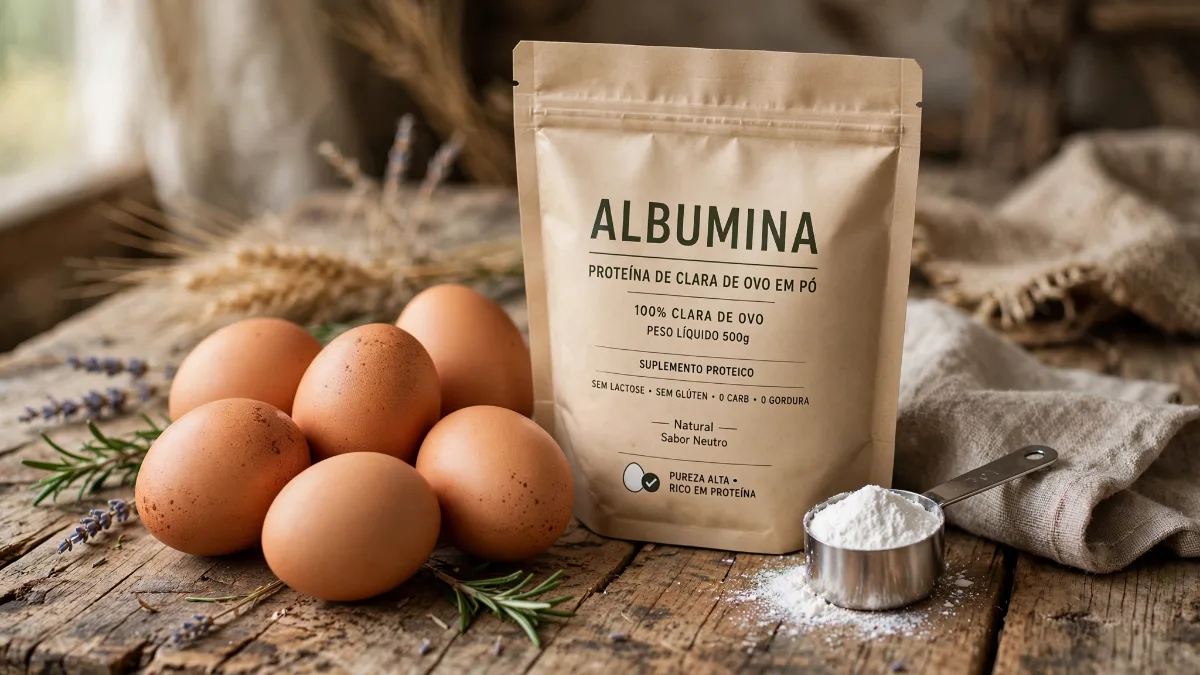
Fresh eggs next to a package of powdered albumin on a rustic wooden table.
To truly understand the difference between whey protein and albumin, we need to look at four fundamental pillars: digestion speed, amino acid profile, cost, and digestive tolerance.
First, speed. Whey wins by a landslide when it comes to immediate post-workout recovery. Albumin shines in consistency over hours. Second, the amino acid profile: although both are complete proteins, whey has a slightly higher leucine content, which theoretically gives it a slight advantage in activating the mTOR pathway (responsible for hypertrophy).
Third is the wallet. Albumin wins easily in terms of economy, allowing those on a tight budget to hit their daily protein goals without spending a fortune. Finally, digestion: whey can challenge those with lactose intolerance (unless it is isolate or hydrolyzate), while albumin challenges the intestinal tract with the famous sulfur-induced gas.
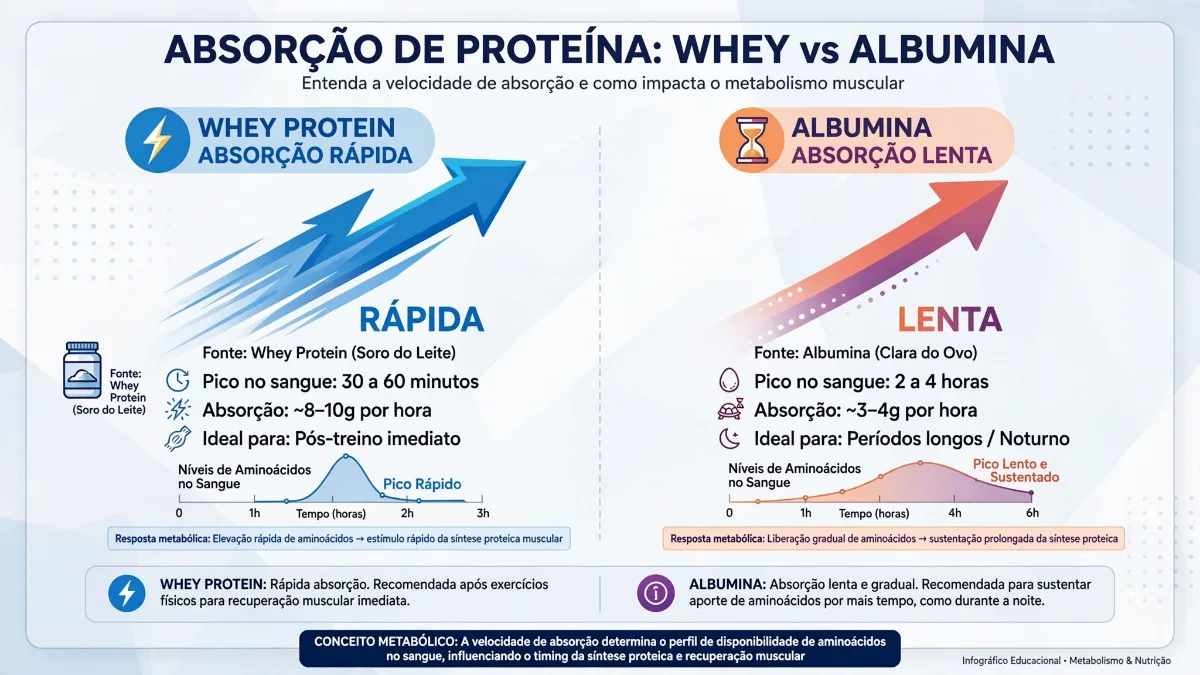
Visual infographic comparing two directional arrows representing fast and slow speeds.
To make your decision easier when choosing which supplement to put in your shopping cart, we've structured the main scientific and practical data into a direct, no-nonsense table with the essential metrics for each supplement.
As Harvard Health Publishing consensus on protein sources points out, the critical factor for nutritional success is not the supplement itself, but the overall context of the diet. Looking coldly at the numbers helps you understand where each one fits best into your daily life.
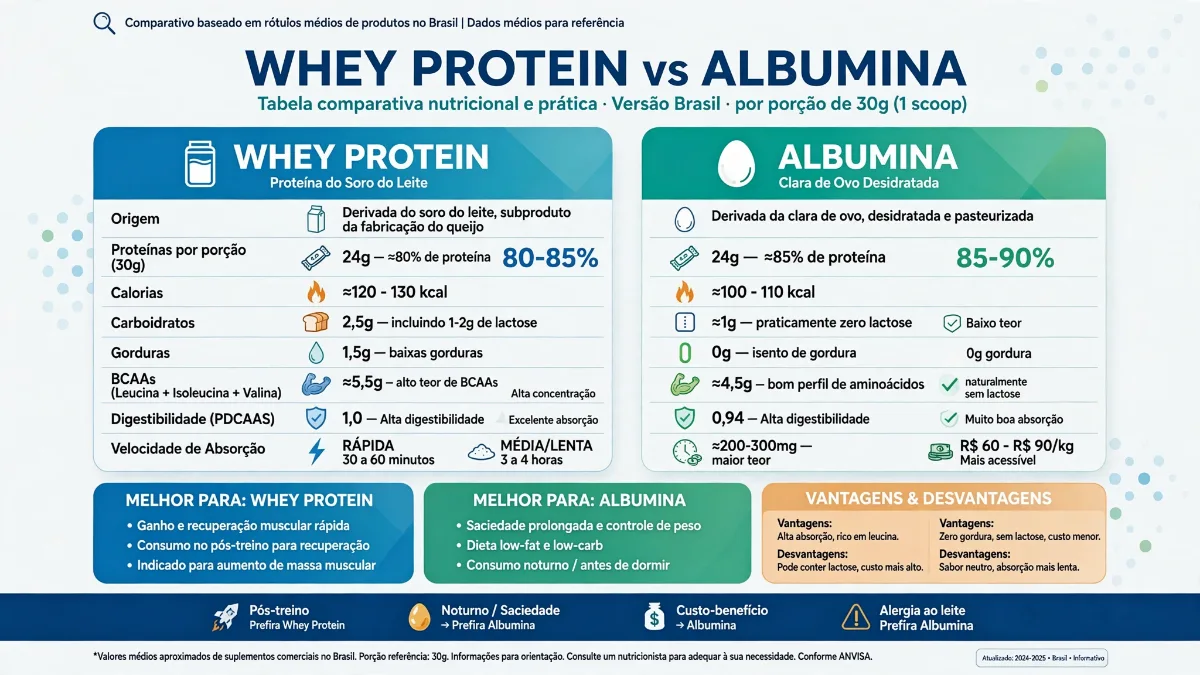
Detailed comparative table showing the nutritional metrics of both supplements.
So, does albumin replace whey? The short answer is: yes, in terms of contributing to your daily protein goal, it replaces it perfectly. However, in terms of metabolic timing, they deliver different experiences.
If your main focus is muscle mass gain and you have the budget to invest, whey protein delivers unbeatable practicality right after your workout, plus a slightly more optimized amino acid profile. Now, if your goal is to keep protein intake high without spending much—or if you want a slow-absorption option to take before sleep or during long intervals between meetings—albumin fulfills the role admirably.
Remember: in terms of hypertrophy, science consistently shows that the number one factor is hitting the total amount of protein your body needs throughout the 24 hours of the day. If you hit this goal with chicken, eggs, beans, whey, or albumin, your muscle will grow just the same.

Athlete smiling in the gym with a shake bottle in hand.
Let's address the elephant in the room: albumin gas. If you've ever taken pure albumin with water, you know the social setting can get a bit delicate a few hours later. This happens because egg white protein is rich in sulfur. To minimize this unwanted side effect, the secret is to introduce the supplement gradually—start with half a dose—stay well hydrated throughout the day, and, if possible, blend it with fiber-rich fruits or use flavored versions that mask the taste and improve digestibility.
On the other hand, whey protein can cause abdominal discomfort, bloating, and gas in people with lactose intolerance or whey sensitivity. In these cases, switching to an isolate or hydrolyzed whey protein (where lactose is practically zeroed out) usually solves the problem.
It is worth noting a fundamental safety warning: excessive protein consumption, regardless of the source, requires healthy kidney function. People with a history of kidney disease should never start high-protein diets or heavy supplementation without guidance from a doctor or nutritionist.

Person drinking water in a bright environment, highlighting the importance of hydration.

💪 O 100% Pure Whey Zero Lactose da Probiótica oferece proteína de alta qualidade e é ideal para quem deseja complementar a alimentação sem consumir lactose.
Aviso de Saúde
O conteúdo deste artigo é puramente informativo e educacional, baseado em pesquisas publicadas. Ele não substitui o aconselhamento, diagnóstico ou tratamento médico profissional. Consulte sempre um médico ou nutricionista antes de realizar mudanças na sua dieta, treino ou suplementação.
Entusiasta de nutrição e biohacking, focado em simplificar a ciência da saúde.
Participe da discussão com a comunidade do Metaboliza